IN Brief:
- Balfour Beatty has secured a £121m National Grid contract to extend the Bramford 400kV substation in Suffolk.
- The four-year project forms part of the Bramford to Twinstead scheme and the wider Great Grid Upgrade.
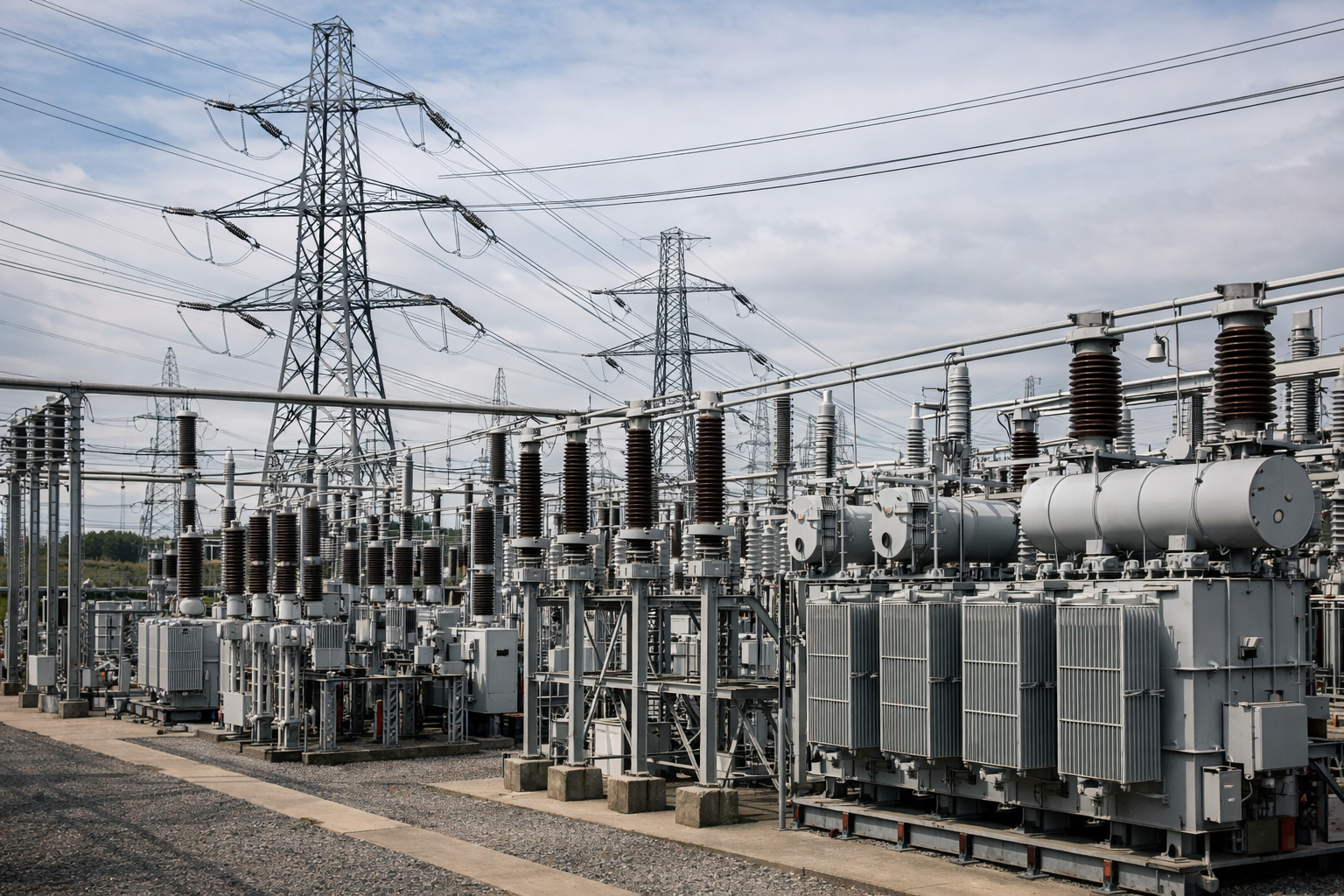
- The works include four new circuits, two grid supply points, two shunt reactors, gantry structures, and monitoring, control, and protection systems.
Balfour Beatty has been awarded a £121m contract by National Grid to deliver the Bramford 400kV substation extension in Suffolk.
The four-year contract has been awarded through National Grid’s EPC framework and forms part of the Bramford to Twinstead project. Work has already started, with completion expected in 2030. Around 150 people will work on the project at peak, including apprentices and graduates.
The scope covers the design and installation of the substation extension. Balfour Beatty will connect four new circuits, including two new grid supply points, and install two new shunt reactors to support network reliability and efficiency. The company will also integrate new gantry structures for overhead line connections and deliver monitoring, control, and protection systems.
Bramford sits within National Grid’s wider Great Grid Upgrade, which is intended to increase transmission capacity, strengthen regional resilience, and support the connection of low-carbon generation. East Anglia is a critical part of that programme because it combines existing transmission infrastructure, offshore wind routes, interconnection, demand growth, and reinforcement requirements across the eastern network.
Substation projects of this type are less visible than new overhead lines, offshore wind farms, or interconnectors, but they determine whether new generation and demand can connect securely. A 400kV extension has to manage electrical clearances, outage planning, protection coordination, civil works, foundations, heavy equipment logistics, system studies, testing, and staged commissioning while remaining tied to an operational transmission network.
The inclusion of shunt reactors is particularly relevant as the transmission system carries more variable and long-distance power flows. Shunt reactors absorb reactive power and help control voltage on high-voltage networks, especially where lightly loaded lines or cable sections can create voltage rise. Poor voltage management can restrict transfers, stress assets, and reduce operational headroom.
National Grid has also been installing shunt reactors at substations including Cottam, Wylfa, and Willington, showing how reactive power assets are becoming a routine part of transmission reinforcement. Bramford places the same equipment class inside a larger substation extension, alongside new circuits, grid supply points, and protection systems.
The Bramford to Twinstead scheme forms part of a broader change in how the UK transmission network is being used. The historic system was designed around large power stations at known nodes. The emerging system has more offshore wind, onshore renewables, interconnectors, storage, data centres, transport electrification, and industrial demand distributed across different regions. Power flows are becoming more dynamic and more dependent on weather, market conditions, and cross-border exchange.
That operational shift increases the value of substation flexibility. New circuits and grid supply points expand physical capacity. Protection and control systems allow the network to operate safely under changing fault levels and flow patterns. Monitoring systems provide better visibility over assets that are expected to work harder and support more variable conditions. Gantry and overhead line interfaces connect the substation into the wider reinforcement route.
Transmission delivery risk remains high across the UK. Major projects depend on consents, outage windows, supply-chain capacity, transformer and switchgear availability, local works, environmental requirements, specialist labour, and coordination between contractors and network operators. The four-year delivery period reflects the scale of integration required at an operational 400kV site.
Contractor frameworks are becoming strategically significant as network operators prepare to deliver multiple complex projects in parallel. Britain is not only adding more wires. It is also upgrading the substations, voltage-control assets, protection schemes, communication systems, and control interfaces that allow those wires to carry useful power securely.
Bramford will not be the most publicly prominent element of the Great Grid Upgrade, but it is one of the practical assets that turns reinforcement into system capacity. The project combines circuits, reactive power control, protection, monitoring, and grid supply infrastructure in a region that will remain central to Britain’s low-carbon power flows through the next decade.