IN Brief:
- The Netherlands has imposed localised moratoriums on new grid connections for generation and large loads.
- Residential connection restrictions are due to extend to Utrecht as network constraints deepen.
- Dynamic line rating, time-dependent transmission rights, and revised connection rules are being used to release capacity from existing assets.
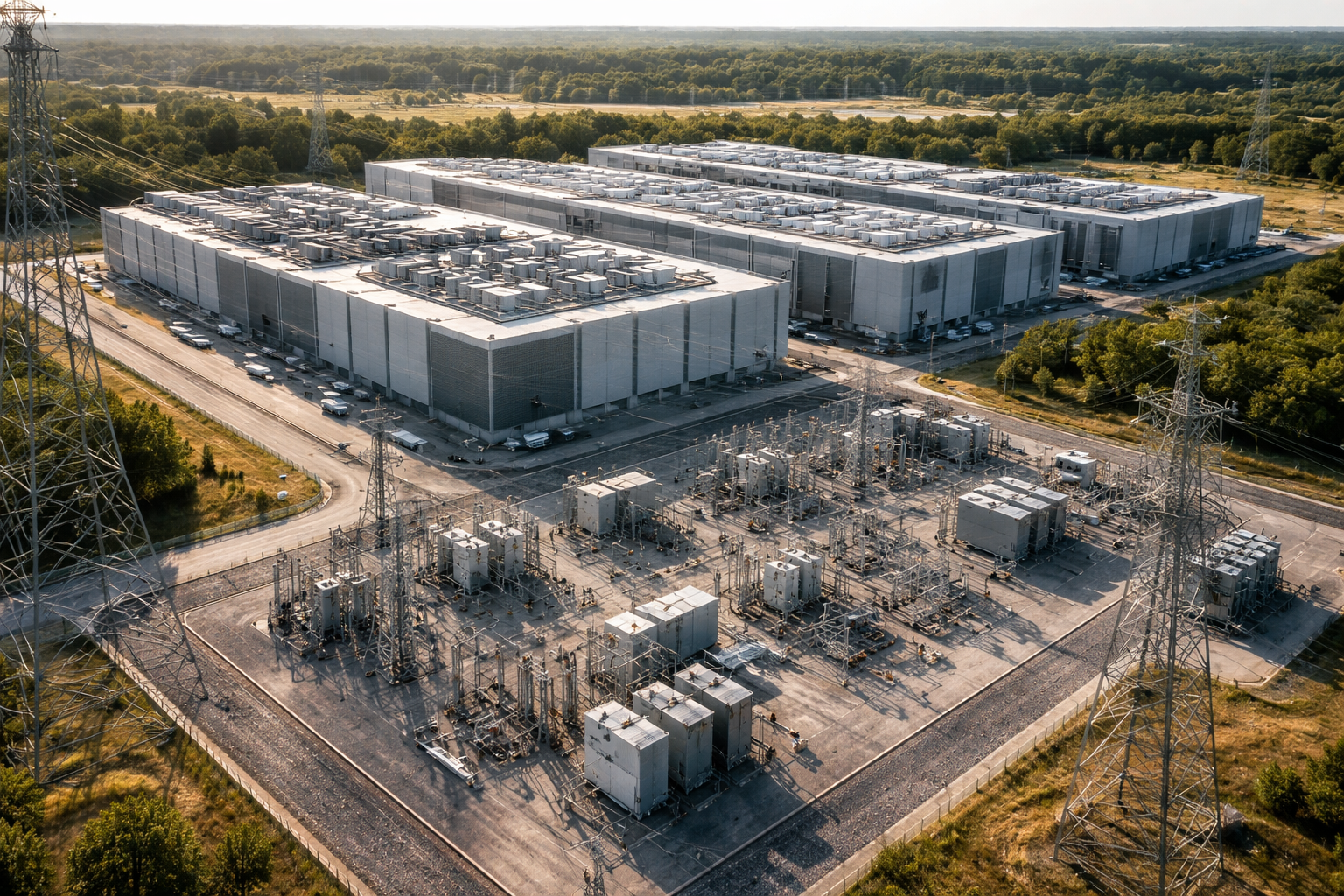
TenneT and Dutch authorities are working through one of Europe’s clearest examples of grid saturation, with localised moratoriums on new connections exposing the gap between electricity-demand growth and the pace of network reinforcement.
The Netherlands has applied restrictions on new connections for power generation and non-residential loads in affected areas since 2022. Those constraints are now due to extend to new residential connections in Utrecht, showing how congestion has moved from a specialist planning issue into a practical limit on housing, industry, renewables, and data-centre development.
Dutch renewable energy capacity doubled between 2019 and 2023 to 36GW, reaching 41% of national power generation. Over the same period, large electricity loads continued to grow. Data-centre demand has become especially prominent, with hundreds of megawatts under construction and a much larger pipeline in development or awaiting approval.
Transmission expansion has not moved at the same pace. TenneT has indicated that transmission projects can take up to 12 years to complete, while more than half of the transmission projects needed by 2030 still await permits. Land availability, environmental constraints, nitrogen oxide rules, equipment lead times, and planning complexity all add delay.
In the absence of immediate physical reinforcement, the grid is being operated more actively. TenneT has identified 9.1GW of existing Dutch grid capacity that can be used during off-peak hours through time-dependent transmission rights. The operator has also introduced use-it-or-lose-it capacity rules, shorter signing windows, and front-loaded payments to discourage speculative holding of grid capacity.
Dynamic line rating is also being deployed across parts of the system. Rather than relying only on conservative static assumptions, the technology assesses real operating conditions, including weather, temperature, and loading, to determine how much capacity can be used safely. TenneT has indicated that the approach can unlock up to 30% more capacity in some cases.
These measures increase utilisation of existing assets, but they do not replace substations, conductors, transformers, protection upgrades, and new routes. Dynamic rating, queue reform, and flexible connection products can buy time and improve allocation, yet the Netherlands still needs a physical build programme that matches the scale of electrification now reaching the network.
The Dutch position reflects a wider European pressure pattern. Load growth is becoming less predictable as heat pumps, EV charging, industrial electrification, electrolysers, data centres, and distributed generation change the shape of demand and power flows. Traditional connection queues can leave viable projects waiting behind speculative schemes, which pushes system operators toward more active capacity management and stronger connection milestones.
Battery storage forms part of the response, although its value depends heavily on location and operating model. A battery connected in a constrained area can support balancing, voltage management, and local flexibility, but it can also add import demand if operated without regard to network conditions. Storage therefore has to be planned around grid need, connection rights, dispatch strategy, and market access.
Large European battery projects are already moving into that role. Greenvolt’s 99.8MW/288.6MWh system in Hungary, described in coverage of the country’s largest battery installation, shows how Central and Eastern European markets are adding assets capable of supporting frequency regulation, voltage regulation, renewable integration, and wider system flexibility. The Dutch constraint problem shows why those assets need to be integrated into network planning rather than treated only as merchant trading projects.
The Netherlands is also looking offshore. North Sea offshore wind expansion and international interconnectors could provide additional flexibility and generation diversity, including the planned LionLink interconnector between the Netherlands and the UK. Those projects, however, bring their own cost-sharing, permitting, routing, converter-station, and market-design challenges.
Connection capacity has become a strategic resource. In a constrained power system, the ability to connect can determine where factories are built, where homes are developed, where renewables can export, and how quickly electrification can move from policy to operation. Smarter grid operation can release headroom, but the durable solution remains physical reinforcement delivered at a pace closer to demand growth.