IN Brief:
- European Energy has signed a balancing agreement with Twig Energy for the Måde hybrid park.
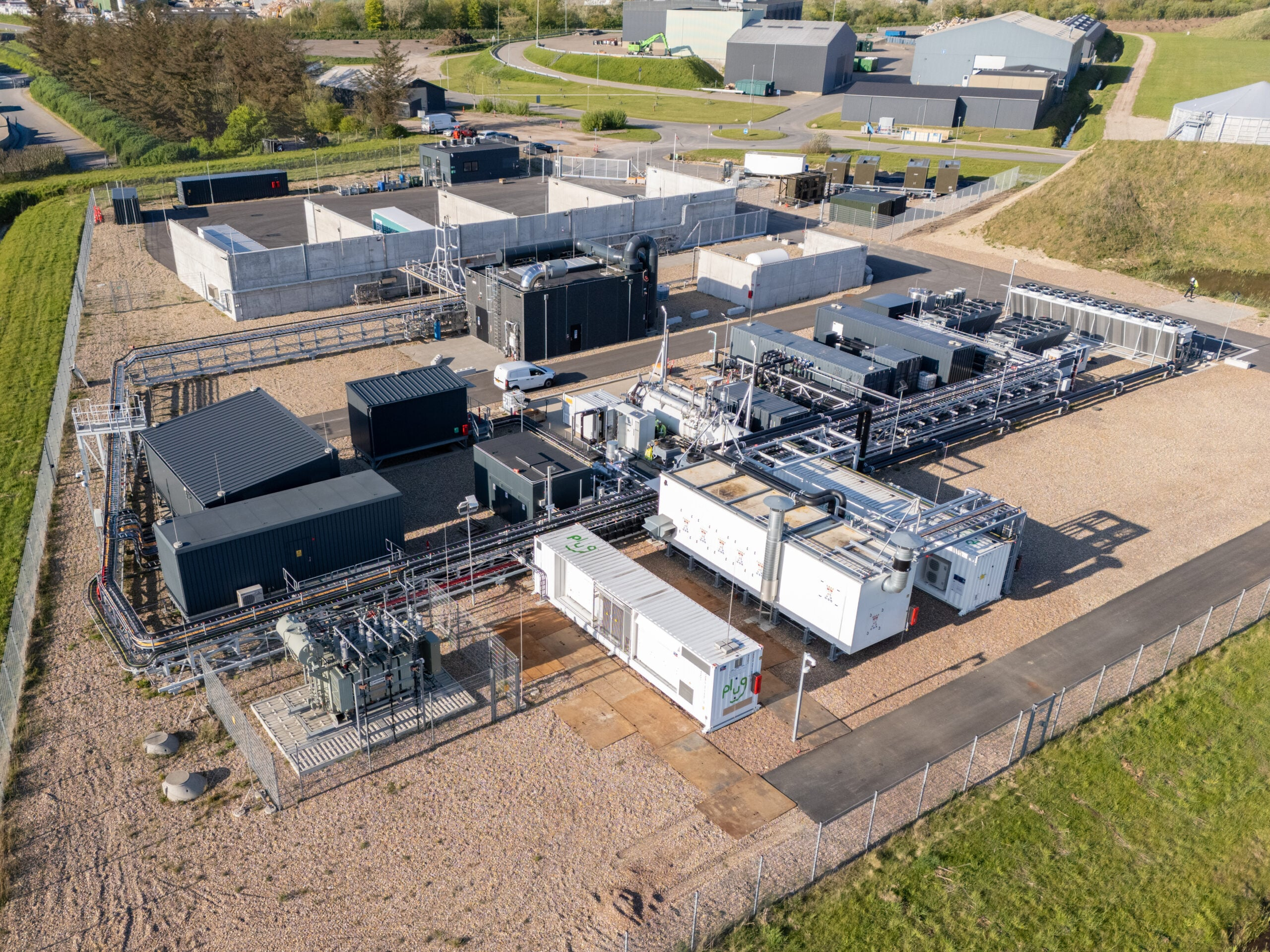
- The Danish site combines 16MW of wind, 5MW/20MWh of battery storage, and 8.1MW of electrolyser capacity.
- The agreement will optimise flows between generation, storage, hydrogen production, and grid export.
European Energy has signed a balancing and optimisation agreement with Twig Energy for its Måde hybrid park near Esbjerg in western Denmark.
The operational site combines two wind turbines with 16MW of total capacity, two electrolysers totalling 8.1MW, and a 5MW/20MWh battery energy storage system. Twig Energy will act as balancing responsible party, managing electricity flows between generation, battery storage, hydrogen production, and grid export.
The arrangement creates a single optimisation structure across the site’s main assets. Electricity generated on site can be stored, used for hydrogen production, or exported to the grid, with dispatch decisions shaped by market prices, system conditions, and operational requirements. Further optimisation work is expected over the coming months.
Måde’s configuration reflects a more integrated approach to renewable project design. Wind generation provides variable output, batteries add short-duration flexibility, and electrolysers create a controllable demand source that can convert electricity into hydrogen when operating conditions are favourable. That combination can reduce wasted generation and improve the commercial use of renewable output.
Hybrid systems of this kind need precise coordination. Electrolysers require stable operating conditions, batteries must be managed against degradation and state of charge, wind output changes with weather, and grid export remains constrained by connection terms and market conditions. Balancing software and market access become as important as the physical equipment because the value of the site depends on how each asset is dispatched.
Denmark offers a strong setting for this kind of system. Esbjerg has become a major North Sea energy hub, with offshore wind, port infrastructure, hydrogen development, industrial demand, and grid infrastructure converging in the same region. Hybrid assets located in such zones can use renewable power locally when grid export is less attractive, while still participating in power markets when conditions support it.
The approach also fits a wider European move toward batteries as operational assets rather than passive add-ons. A recent look at European storage projects totalling 3.3GWh traced how route-to-market agreements and co-located assets are becoming central to project design. Måde extends the model by using hydrogen production as another controllable element in the energy system.
Power-to-X projects have sometimes been treated as future-facing industrial schemes detached from day-to-day grid operation. The Måde agreement points in a more practical direction, where electrolysers operate as flexible electrical loads within a live market framework. That raises the standard for controls, metering, forecasting, and operational accountability, because the site must satisfy both hydrogen production requirements and electricity-market rules.
The technical requirements are broad. Wind turbines, battery inverters, electrolyser controls, transformers, metering systems, communication links, energy-management platforms, and market interfaces all need to operate coherently. Cybersecurity and data reliability also become more important when the site’s operating mode can change dynamically in response to system signals.
Måde gives European Energy a working example of how multi-asset renewable sites can be operated as integrated infrastructure. Installed capacity remains important, but the stronger test is whether generation, storage, flexible demand, and grid export can be coordinated without leaving value stranded in separate systems.