IN Brief:
- National Grid has completed substation upgrades at Cottam, Wylfa, and Willington.
- The work included installation and energisation of shunt reactors to manage voltage levels and absorb excess reactive power.
- The upgrades form part of wider transmission investment as generation patterns and power flows change across Britain.
National Grid has completed voltage-control upgrades at Cottam, Wylfa, and Willington substations, installing and energising shunt reactors to support transmission system stability.
Shunt reactors absorb excess reactive power and help regulate voltage across high-voltage networks. Their role becomes more prominent where power flows are changing, conventional generation is closing, and long circuits or cable-heavy sections of the network create different voltage-management conditions.
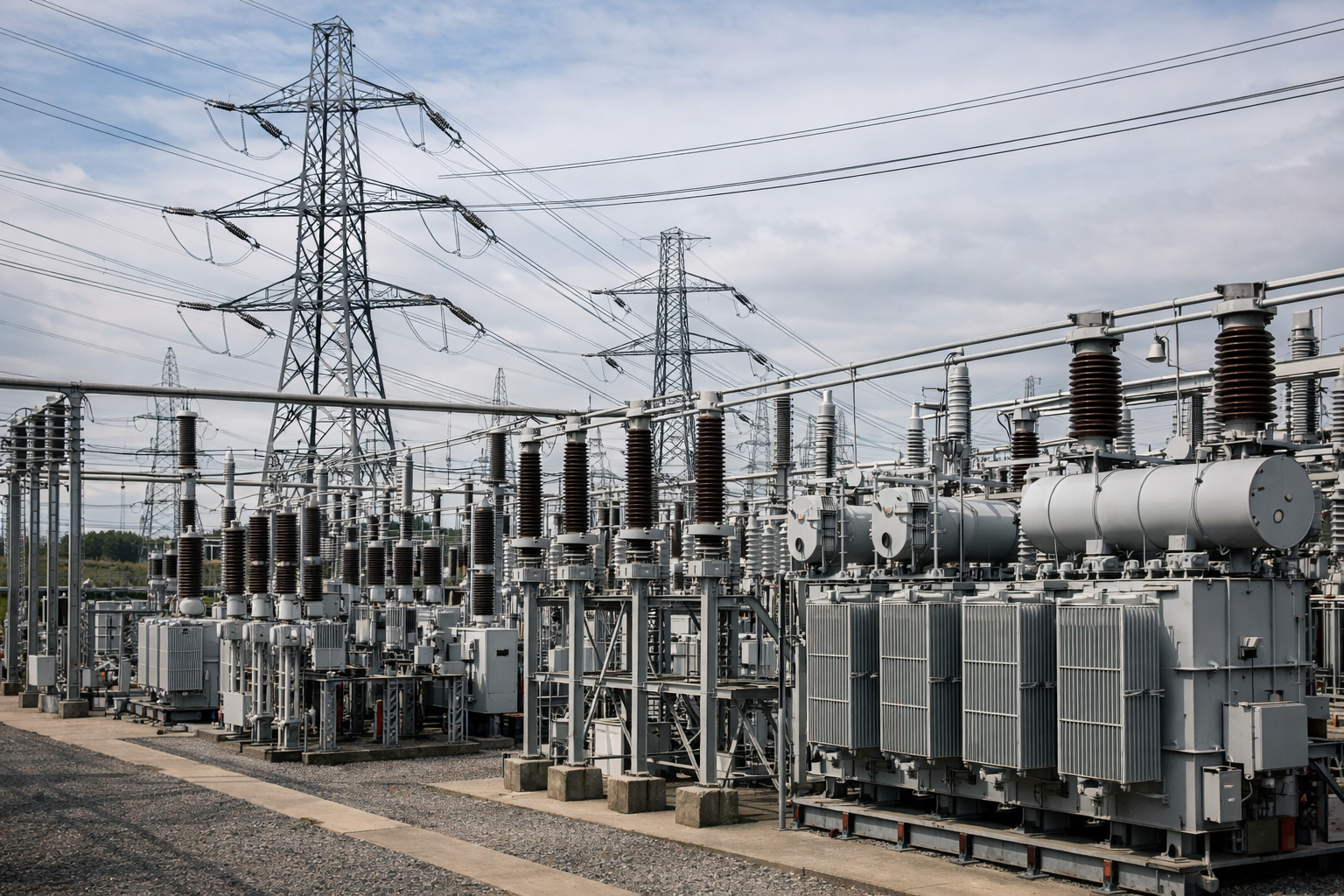
Each unit installed across the three sites weighs around 130 tonnes, is more than seven metres long, and stands almost four metres high. The scale reflects the physical engineering behind transmission reliability, where system stability depends on major electrical assets as well as software, monitoring, and operational control.
At Cottam, the upgrade supports voltage stability following changes in generation around the former power station site. At Wylfa, the installation strengthens North Wales network requirements, including wider system conditions linked to Dinorwig and Pentir. At Willington, the equipment forms part of substation expansion work.
The upgrades sit within National Grid’s wider five-year transmission investment programme, valued at around £31bn. That programme is being shaped by new generation connections, offshore wind integration, interconnector flows, changing demand patterns, and the need to move more power across longer distances.
Voltage control remains one of the less visible but critical parts of the energy transition. As synchronous generation reduces in some regions and converter-connected renewable assets expand in others, transmission operators need additional ways to manage reactive power, voltage excursions, and network stability. Shunt reactors, synchronous compensators, power-electronics controls, and advanced monitoring all contribute to that task.
The work also belongs to a wider programme of reinforcement across Britain’s transmission system. National Grid’s request for additional funding for major reinforcement shows how much infrastructure must still be built or upgraded to accommodate new generation and demand. Substation works are often less visible than new overhead lines or subsea links, but they determine how much power the network can carry safely.
Older transmission patterns were built around large thermal power stations connected at known locations, often providing inherent voltage and inertia support. The emerging system is more geographically dispersed, with offshore wind, onshore renewables, storage, interconnectors, and electrified demand creating different flow patterns. That changes the requirements placed on substations and supporting equipment.
Excess reactive power can increase stress on switchgear, transformers, cables, and other network assets. Poor voltage management can constrain power transfers, reduce asset availability, and create operational risk during changing system conditions. Shunt reactors provide a robust method of absorbing reactive power where system studies show that voltage needs to be controlled.
Cottam, Wylfa, and Willington illustrate the engineering work required behind headline clean energy targets. New renewable capacity can only be useful where the transmission system has the voltage control, protection, thermal capacity, and operational resilience needed to carry it. Substation upgrades of this kind are therefore part of the practical machinery of decarbonisation, even when they sit far from public attention.