
IN Brief:
- CIP has agreed to sell minority stakes in the Devilla BESS to two public investment bodies.
- The Scottish project is rated at 500MW/1,000MWh and scheduled for commissioning in 2028.
- The asset is designed to reduce wind curtailment and support grid balancing in Scotland.
Copenhagen Infrastructure Partners has agreed to sell minority stakes in the 500MW/1,000MWh Devilla battery energy storage system in Fife to the Scottish National Investment Bank and the Nuclear Liabilities Fund.
CIP will retain a majority stake in the project, which is scheduled for commissioning in 2028. Devilla is a two-hour, transmission-connected BESS and forms part of a wider storage portfolio developed through CIP’s partnership with Alcemi.
The project has a 10-year optimisation agreement with SSE and a 15-year capacity market contract. Its Scottish location is commercially and technically significant because the region has high renewable generation output and recurring constraint pressure when transmission capacity cannot move all available wind power south to demand centres.
Devilla sits alongside Coalburn 1 and Coalburn 2, both 500MW/1,000MWh projects. Together, the three transmission-connected assets form one of the most significant grid-scale battery clusters in the GB market, with Coalburn 1 and Coalburn 2 expected to enter operation ahead of Devilla.
The Scottish National Investment Bank’s participation gives the project a clear public-investment route, aligned with Scotland’s net-zero infrastructure mandate. The Nuclear Liabilities Fund’s involvement adds further long-term institutional capital to an asset class now being treated as part of the electricity system’s physical architecture.
Scotland’s curtailment challenge shows why battery storage has moved from ancillary-service niche to mainstream grid infrastructure. Wind output can exceed the transfer capability of the transmission system, creating constraint payments, redispatch costs, and underused renewable electricity. Batteries placed near constrained generation zones can absorb output and discharge later, depending on market access and dispatch conditions.
Network operators are already working to reduce constraint costs through reinforcement and operational changes, with SSEN Transmission targeting £296m of constraint cost reductions. Storage projects such as Devilla add another layer of flexibility while larger transmission upgrades move through development, consenting, and construction.
The commercial stack for a project of this scale remains complex. Capacity market contracts provide a long-term revenue floor, optimisation agreements manage trading and market access, and balancing services can capture system value. Location-based revenues in the balancing mechanism can be especially important where batteries relieve local constraints rather than simply arbitrage national price spreads.
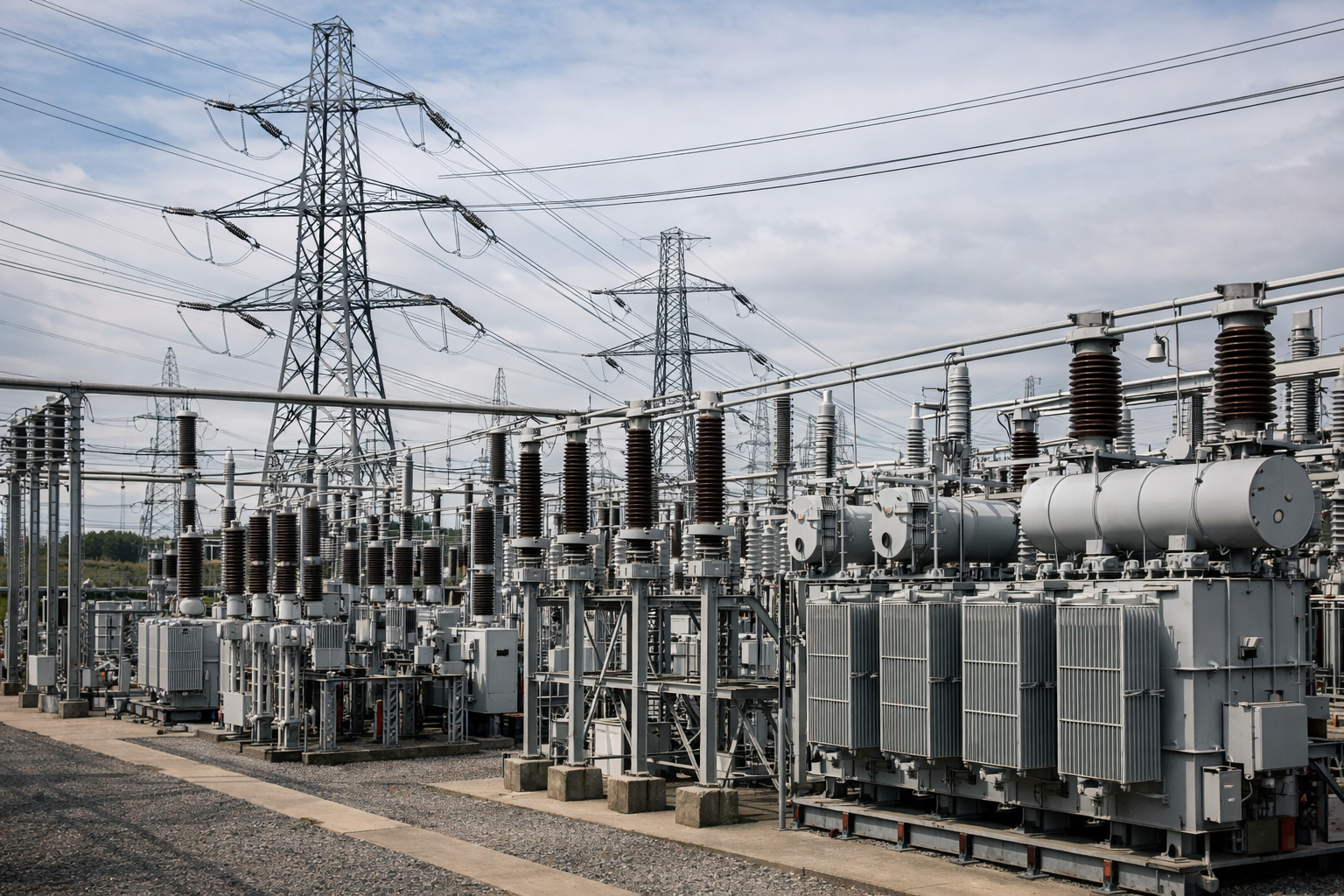
Battery design at transmission scale also brings heavier engineering requirements. Grid connection equipment, transformers, protection systems, fire safety design, power conversion systems, cooling, controls, and communications all need to be specified for high utilisation and long operational life. As project sizes increase, integration risk becomes more visible.
GB storage is now moving into infrastructure scale. Earlier battery projects were often measured in tens of megawatts and optimised around frequency response. Devilla belongs to a newer class of assets sized to interact with transmission constraints, renewable curtailment, and capacity adequacy.
By its planned 2028 commissioning date, large batteries will be expected to operate as part of the core grid toolkit. Public capital entering the Devilla project confirms that storage is no longer a peripheral flexibility resource, but a central part of the investment case for a renewable-heavy power system.

