
IN Brief:
- Apollo has received Bureau Veritas Approval in Principle Level 2 for its PALM Quick Connection System.
- The system simplifies dynamic cable connection and disconnection for floating offshore wind turbines without specialist vessels, divers, or personnel transfer.
- Reconnection has been demonstrated at 5.5 hours, with potential through-life savings of £120m for a gigawatt-scale floating wind farm.
Apollo has received Bureau Veritas Approval in Principle Level 2 for its PALM Quick Connection System, moving the technology closer to commercial deployment in floating offshore wind.
The milestone follows a 12-month full-scale FEED study funded by the Offshore Wind Growth Partnership and Wave Energy Scotland. The certification confirms that the PALM QCS design has been independently reviewed against recognised industry standards and can now progress toward full technical qualification and Type Approval.
PALM QCS is designed to simplify the connection and disconnection of dynamic cables from floating wind turbines. The system avoids the need for specialist vessels, divers, or personnel transfer, reducing the operational complexity of offshore maintenance and tow-to-port strategies.
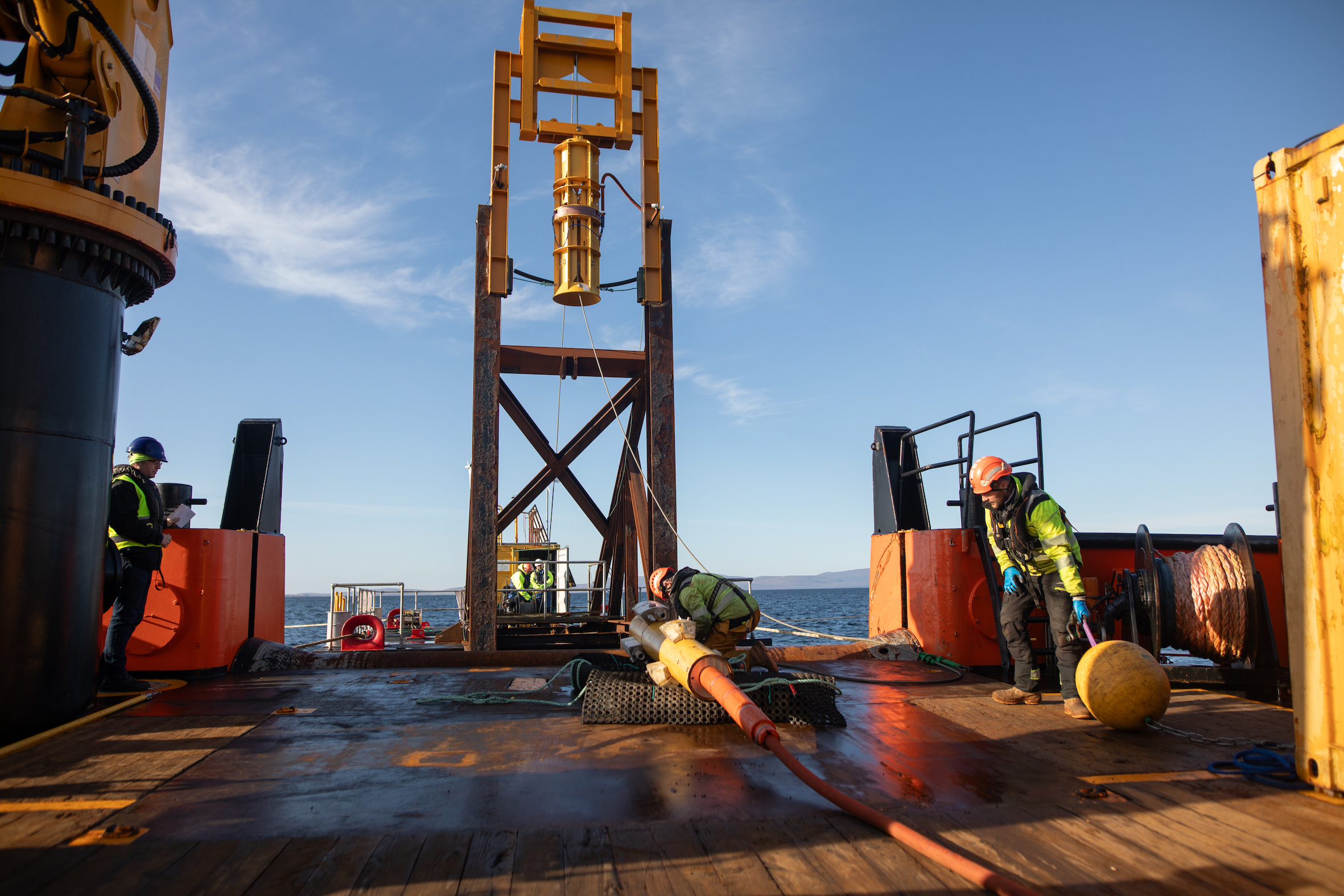
The technology has already completed offshore field trials, including 50 successful connect and disconnect operations. A full-scale system is expected to achieve dynamic cable reconnection in 5.5 hours, compared with conventional marine operations that can take several days. Apollo has identified potential through-life savings of £120m in a gigawatt-scale floating offshore wind farm.
The engineering principle behind PALM QCS is a mechanical plug-and-receptacle system. The receptacle is integrated with the floating structure, while the plug is pre-installed with the mooring and cable system. The device guides electrical and mechanical wet-mate connectors together using the winching action of a tow tug, with a passive guide structure reducing reliance on additional offshore handling systems.
The system is available for cable-only, mooring-only, and combined cable and mooring configurations. Apollo has designed the mechanical connection to be scalable up to 1,100 tonnes minimum break load, with electrical capacities based on current market availability around 45kV and 66kV connectors approaching readiness. The design is marinised, mechanically driven, and intended to minimise moving parts in order to support long-term reliability.
Floating offshore wind is moving from pilot-scale projects toward commercial arrays, where maintenance strategy becomes central to cost and availability. Unlike fixed-bottom turbines, floating units may need to be disconnected and towed to port for major maintenance. That creates an operational burden around dynamic cables, moorings, weather windows, vessel availability, and lost generation.
Dynamic cable reliability remains one of the most closely examined areas in floating wind. Cables move with the platform, operate in a demanding marine environment, and must withstand fatigue, bending, electrical loading, and mechanical interaction with mooring systems. A faster and safer connection system cannot remove those engineering challenges, but it can reduce the time and risk associated with intervention.
The technology sits within a broader offshore grid and cable protection context. CRP Subsea’s East Anglia Two cable protection contract shows how subsea cable integrity is already central to fixed offshore wind delivery. Floating wind adds another layer of complexity because the cable system is dynamic rather than static, making maintainability and reconnection speed more consequential over the life of the project.
The UK and European floating wind pipeline has significant potential, but commercial deployment depends on reducing levelised cost of energy and improving operational certainty. Turbine size, port infrastructure, vessel strategy, mooring design, cable layout, grid connection, and insurance requirements all feed into that cost base. Technologies that reduce marine spread, shorten outage duration, and improve safety can have a material effect at array scale.
Apollo is also planning further subsea electrical trials in 2027 through an EU Horizon project led by the European Marine Energy Centre. That programme will add higher-voltage reliability and qualification data, which will be needed before developers can treat the system as part of a bankable operating strategy.
The company is seeking partners for full-scale pilot deployment, with project discussions available through Apollo’s contact page.
Commercial deployment will require qualification evidence, offshore installation procedures, integration with turbine and floating platform designs, connector compatibility, safety-case development, and acceptance from insurers, certifiers, and project financiers. Approval in Principle moves PALM QCS further along that path, while the wider floating wind sector continues to require maintenance systems designed for array-scale operation rather than adapted from one-off offshore interventions.

