IN Brief:
- East Anglia THREE has installed its first offshore wind turbine using 115-metre blades.
- The 1.4GW project will use 95 turbines and is expected to power more than 1.3 million homes.
- All 285 blades for the project are being manufactured at Siemens Gamesa’s Hull factory.
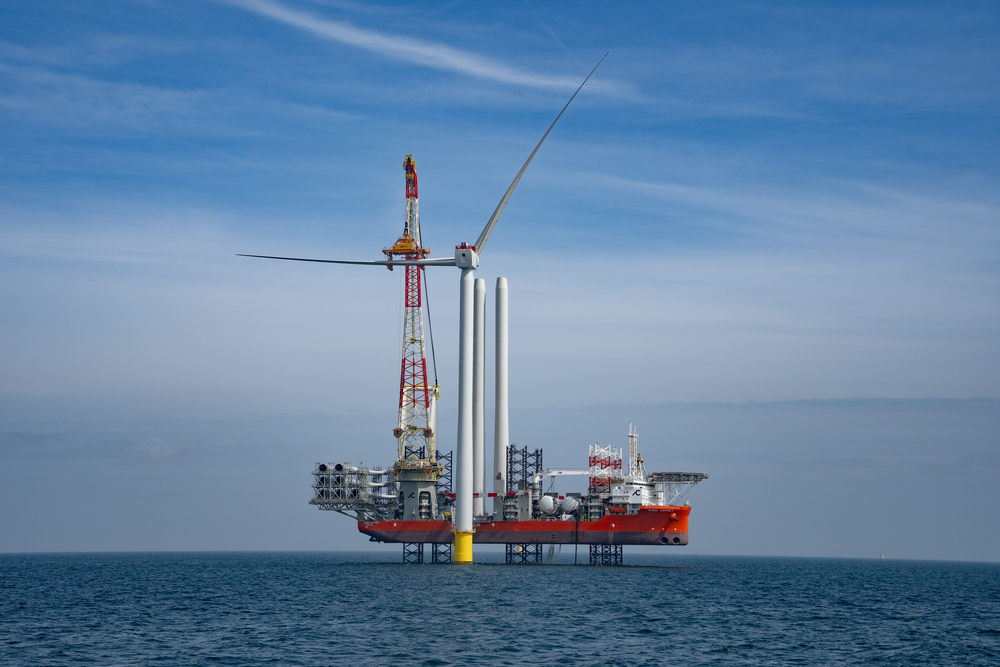
ScottishPower Renewables and Masdar have installed the first turbine at the East Anglia THREE offshore wind farm, using 115-metre blades in a UK offshore wind first.
The project, located off the Suffolk coast, will have an installed capacity of 1.4GW when complete. It is being developed as a 95-turbine offshore wind farm and is expected to generate enough electricity for more than 1.3 million homes.
The first installed turbine uses blades longer than a Premier League football pitch. All 285 blades for the project are being manufactured at Siemens Gamesa’s factory in Hull, giving the scheme a direct UK manufacturing footprint as well as a major offshore generation role.
East Anglia THREE forms part of the wider East Anglia offshore wind zone being developed by Iberdrola through ScottishPower Renewables. East Anglia ONE is already operational, with further projects planned across the zone as part of a larger offshore wind build-out in the North Sea.
The turbine installation marks a shift from foundation, port, and logistics activity into the visible generation phase of the project. The scale of the components reflects the continuing move towards larger offshore wind machines. Longer blades and higher-capacity turbines allow developers to generate more electricity from fewer foundations, reducing the number of installed units needed for a given project capacity.
That scale also increases the engineering burden across the supply chain. Larger blades require suitable manufacturing halls, port infrastructure, transport routes, lifting equipment, installation vessels, and weather windows. Offshore wind deployment is increasingly limited not only by turbine design, but by the industrial system needed to manufacture, move, install, and connect the equipment.
The Hull blade manufacturing element sits within a wider policy debate around offshore wind supply chains. The UK has built one of the world’s largest offshore wind markets, but domestic industrial capacity has not always matched deployment ambition. Blade production provides a tangible local manufacturing link, though other areas of the supply chain, including vessels, cables, substations, and specialist electrical equipment, remain under pressure.
The project also adds to the growing volume of offshore generation that must be integrated into the transmission system. Large offshore wind farms require export cables, offshore substations, onshore grid connections, and coordinated reinforcement. Generation capacity only delivers its full value when the network can move power from coastal landing points to demand centres without excessive curtailment.
Offshore wind developers have faced a difficult market in recent years, with inflation, higher financing costs, supply chain constraints, and auction pricing pressure affecting project economics. Larger turbines can improve energy yield, but they also increase exposure to manufacturing delays and installation complexity. The balance between scale, cost, and deliverability is now central to project execution.
East Anglia THREE’s first turbine installation shows that one of the UK’s major offshore wind projects has moved into a critical delivery phase. The use of 115-metre blades demonstrates the direction of turbine technology, while the UK blade manufacturing element underlines the industrial value of connecting clean power deployment with domestic production capacity.
Further project information is available from the East Anglia THREE project page.