IN Brief:
- The government plans legislation this summer to allow cross-pavement charging gullies without a planning application.
- Existing guidance already sets out how local authorities can manage safety, liability, maintenance, and site suitability for these systems.
- The reform sits within a wider shift towards more mixed charging models that combine domestic supply, kerbside access, grants, and local authority delivery.
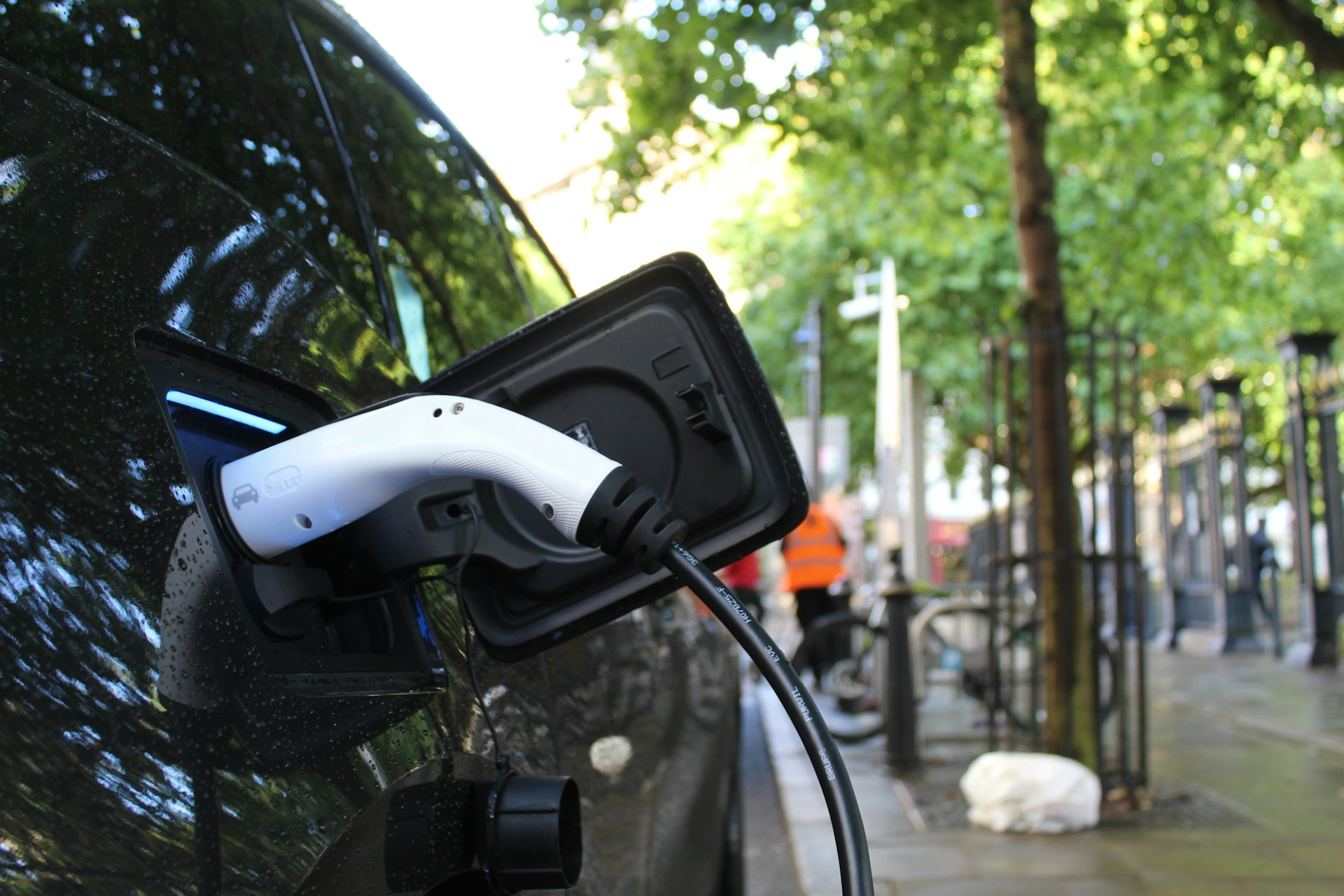
The UK government is preparing legislation that would allow households without off-street parking to install cross-pavement charging gullies without seeking planning permission, opening a simpler route to domestic EV charging for properties that rely on street parking.
Under the proposed change, a cable can be run through a recessed channel in the pavement from a home charger to a vehicle parked on-street. The government has indicated that legislation will be introduced this summer, with implementation expected before the end of 2026. The measure removes one administrative step that has frequently slowed or discouraged otherwise workable installations.
The reform builds on guidance already issued by the Department for Transport and the Office for Zero Emission Vehicles. That guidance covers a wide range of practical considerations, including embedded cable channels, under-pavement arrangements, site suitability, liability, maintenance, interaction with other utilities, and street-level safety. Local authorities remain central to the process because the highway is still public space, even where the electricity comes from a private property.
Grant support has also been broadened. From 1 April 2026, higher chargepoint grants of up to £500 became available to a wider group of applicants, including households with on-street parking, alongside support for renters, landlords, flat owners, and businesses. The policy package is moving in a more coordinated direction, linking grants, highway permissions, and practical installation models rather than treating them as separate questions.
Cross-pavement charging has emerged from a simple constraint in the UK housing stock. A large share of homes do not have driveways or garages, yet many still rely on regular parking close to the property. Public charging can fill part of that gap, but it often costs more than charging from a domestic supply and may not be as convenient for routine overnight use. The result has been a long-running mismatch between the shape of residential streets and the structure of the charging market.
The challenge is not purely technical. A gully in the pavement has to work within the realities of highway maintenance, accessibility, pedestrian safety, parking controls, and ownership boundaries. Councils also have to consider whether a resident is likely to park near the property often enough for the installation to be useful. A cable channel does not reserve a bay, and in many streets the availability of a convenient parking space will vary from day to day.
That means uptake is likely to differ sharply by location. Streets with consistent residential parking patterns and lower pedestrian complexity may be straightforward. Dense urban areas with narrow pavements, high parking turnover, bus routes, or substantial street clutter may remain difficult. The legislation is unlikely to eliminate that variation, but it does provide a clearer legal and administrative route for cases that are already viable.
The wider charging market is moving beyond a single model of provision. Rapid charging hubs, destination charging, local authority kerbside schemes, workplace provision, and domestic supply are all developing at once. Cross-pavement charging sits between those categories, using household electricity but depending on the management of public space. Its growth reflects how charging deployment is becoming more adapted to the shape of real neighbourhoods rather than a fixed national template.
Further detail is available in the government’s cross-pavement charging guidance.