IN Brief:
- Vestas will supply 11 EnVentus turbines for the 70MW Strazhitsa project in Bulgaria.
- The contract includes a long-term Active Output Management service agreement.
- The order adds weight to southeastern Europe’s onshore wind pipeline as European deployment expands.
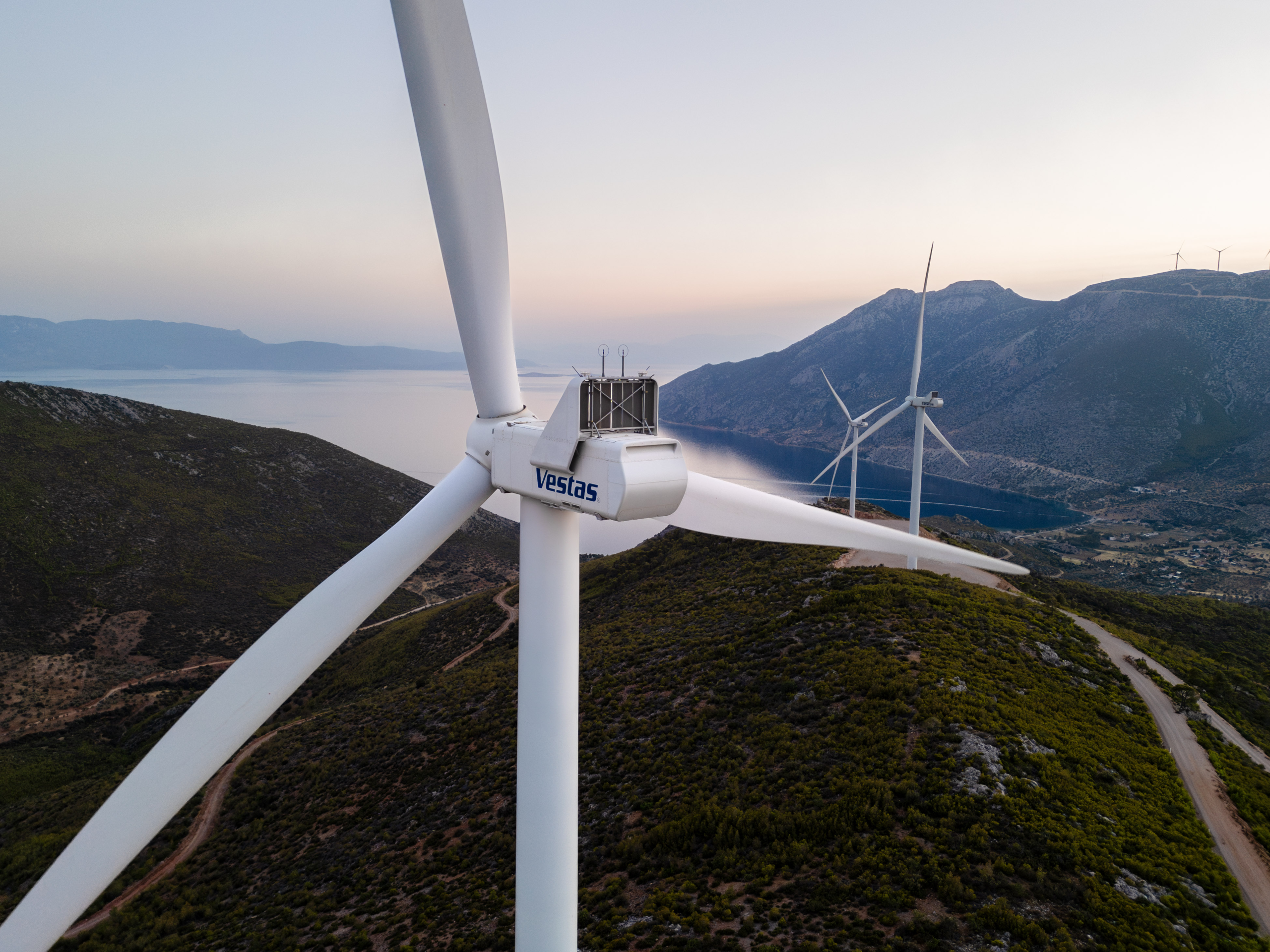
Vestas has secured a 70MW order from Tessa Green Energy for the Strazhitsa wind project in Bulgaria, adding a fresh utility-scale onshore deal in a market that has seen relatively modest wind development compared with Europe’s larger buildout centres. The order covers 11 EnVentus V162-6.4MW turbines and includes a long-term Active Output Management 5000 service agreement, placing the contract firmly in the category of full project delivery rather than simple equipment supply.
The schedule is already defined. Deliveries are expected to begin in the first quarter of 2027, with commissioning planned for the second and third quarters of the same year. Vestas also brings an established local base to the project. The company says it has installed more than 360MW in Bulgaria since entering the market in 2007 and maintains an experienced service organisation covering Bulgaria and the wider Eastern European region. That matters because service capability, spare-parts access, and performance management increasingly sit close to the heart of project finance and operational risk, particularly in markets where the installed base is smaller and specialist support is spread across borders.
Technically, the order is straightforward but significant. The EnVentus platform has become one of the defining products of the current onshore market, designed around larger rotors, higher output classes, and operating profiles that suit lower-wind as well as mainstream sites. The inclusion of Active Output Management also points to the importance of post-commissioning optimisation. In practical terms, that means the project is not only being built to generate power, but to manage availability, output, and service performance over time within the realities of the local grid and operating regime.
The wider market context is what gives the order more weight than its headline capacity alone might suggest. Bulgaria’s electricity system still relies heavily on nuclear and coal generation. IEA country data for 2023 shows nuclear accounted for 40% of total electricity generation and coal for 29%. Against that backdrop, every incremental wind project carries more strategic significance than it would in a market where variable renewables are already deeply embedded. It adds generating diversity, reduces dependence on fossil fuel generation, and gives the grid operator another source of domestic low-carbon electricity that can sit alongside interconnection and conventional plant.
The project also arrives as Europe’s broader wind market continues to move into a new growth phase. WindEurope expects Europe to install 187GW of new wind power capacity between 2025 and 2030, with 140GW of that in the EU-27. Those headline numbers are still dominated by the largest markets, but they also create room for secondary and southeastern European markets to attract more attention from developers, turbine suppliers, and service providers. In those countries, smaller orders can have disproportionate importance because they help rebuild supply-chain confidence, create reference projects, and show that permitting, financing, and grid connection can be brought together again at commercial scale.
That is where the Strazhitsa order becomes most interesting. It is not a gigawatt-class offshore development or a record-breaking auction result. It is a medium-sized onshore project in a country where the pace of wind build has been comparatively subdued. But the combination of turbine supply and long-term service suggests a more durable type of market re-entry than a one-off equipment sale. It points to a project model designed around operation as much as installation, with lifecycle support built in from the start.
For Vestas, the contract reinforces an existing position in Bulgaria. For the market, it offers something slightly broader: evidence that onshore wind investment in southeastern Europe is still capable of moving from pipeline talk to signed orders. In a European market that needs growth across more than a handful of headline countries, those are the kinds of projects that matter. They do not change the map overnight, but they do start to fill it in.