
IN Brief:
- UK Power Networks is trialling Network Exchanger devices fitted to secondary transformers under the NExT innovation project.
- The technology independently manages power flows on each phase to improve voltage control, phase balancing, power factor, and power quality.
- Five selected sites will be monitored to assess real-world performance, retrofit feasibility, and operational integration.
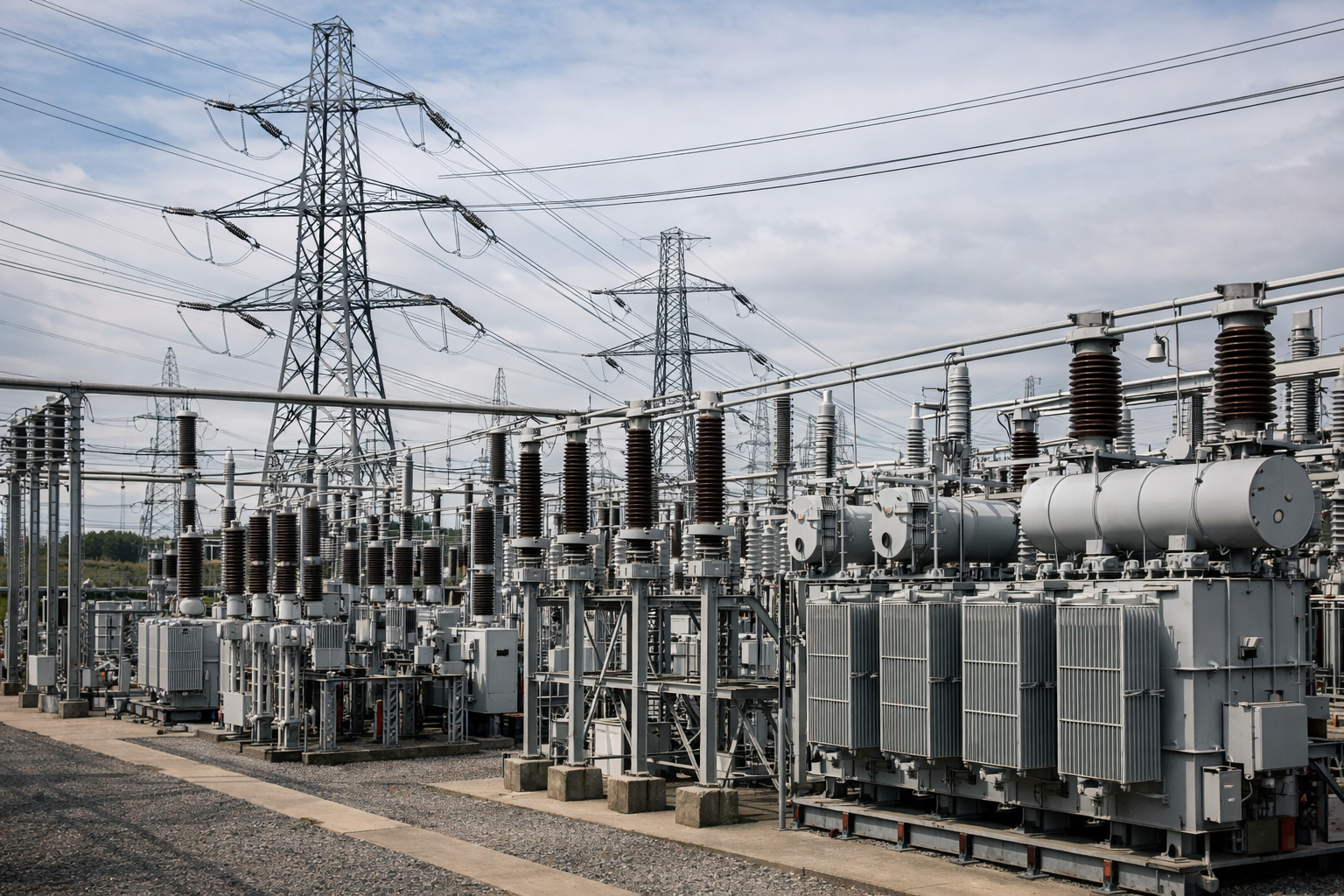
UK Power Networks is trialling power-electronic retrofit technology on secondary transformers to test whether existing low-voltage network assets can be operated with more active control as EV chargers, heat pumps, rooftop solar, and other low-carbon technologies increase local load variation.
The NExT project is focused on a device called the Network Exchanger, or NEx, which is fitted to secondary transformers. The technology independently manages power flows on each phase, allowing more accurate voltage regulation, better phase balancing, improved power factor, and reduced electrical disturbance.
Project delivery will run in phases. The first phase covers unit construction, testing, and site selection. The second phase will install NEx units at five selected sites, where they will be monitored under live network conditions. The trial will assess technical performance, retrofit feasibility, and operational integration before any move into wider business-as-usual use.
Secondary transformers are becoming more important within electrification planning. Many low-voltage networks were designed around relatively predictable demand from homes and small businesses. Electrified heating, EV charging, distributed solar, and small-scale storage are changing that profile, with loads becoming more concentrated, more uneven across phases, and more dependent on customer behaviour, tariffs, and local generation patterns.
Voltage management sits at the centre of that change. Low-carbon technologies perform best when voltage remains within the appropriate operating range. Overvoltage, undervoltage, phase imbalance, and disturbance can affect equipment performance and customer experience. Conventional reinforcement can address constraints, but it is costly, disruptive, and slow where civil works, new cables, larger transformers, or substation upgrades are required.
NExT is exploring whether advanced power electronics can increase the usefulness of existing network assets. By adding more active control to traditional transformers, UK Power Networks is testing whether extra capacity and improved power quality can be unlocked without replacing the whole asset or undertaking major reinforcement at every constrained location.
Distribution-level flexibility is already becoming part of wider system operation. MW Dispatch on the UK grid enables smaller distribution-connected generation and battery assets to be dispatched to relieve transmission constraints. NExT addresses a different part of the network, but both developments move distribution assets away from passive operation and toward more controlled, data-led use.
The retrofit element is central to the project. Distribution networks contain a large installed base of transformers, substations, cables, and protection systems. Replacing or reinforcing all of that infrastructure ahead of demand growth would be expensive and impractical. Technologies that can be fitted to existing assets, where suitable, allow investment to be targeted more precisely.
That does not remove the need for reinforcement. Some locations will still require larger transformers, new substations, cable upgrades, or network reconfiguration. Advanced control can, however, defer or reduce reinforcement where constraints are caused by phase imbalance, voltage limits, or power quality issues rather than absolute asset capacity alone.
Operational integration will be one of the trial’s most important outcomes. A device that works technically still has to fit into control-room processes, maintenance regimes, safety rules, outage planning, asset records, communications systems, and cyber requirements. Distribution network operators need technologies that can be deployed repeatedly without creating excessive operational complexity.
The project also reflects the growing need for low-voltage network visibility. Historically, LV networks often had limited real-time monitoring compared with transmission or primary distribution assets. As customers connect more flexible and high-load equipment, that lack of visibility becomes a constraint on planning and operation.
Power-electronic control at transformer level could complement smart meters, LV monitoring, flexible connections, demand-side response, managed EV charging, and local storage. The strongest network strategies are likely to combine several tools, using reinforcement where it is unavoidable and active control where it can increase capacity from existing assets.
For the trial sites, the performance measures will be practical. UK Power Networks will need to understand whether NEx units improve voltage regulation, phase balance, power quality, available capacity, and resilience under varied operating conditions. Installation complexity, maintenance requirements, and suitability across different transformer types and substation layouts will also shape any future deployment.
The low-voltage network is becoming the front line of electrification. Most EV chargers, heat pumps, rooftop solar systems, and domestic batteries connect locally before their aggregated effect reaches the wider grid. NExT is therefore a test of whether existing distribution infrastructure can be made more flexible before reinforcement becomes the only available answer.
Further project information is available from UK Power Networks Innovation.

