IN Brief:
- TotalEnergies has sold a 50% stake in 11 German battery projects to AllianzGI in a deal backing €500 million of investment.
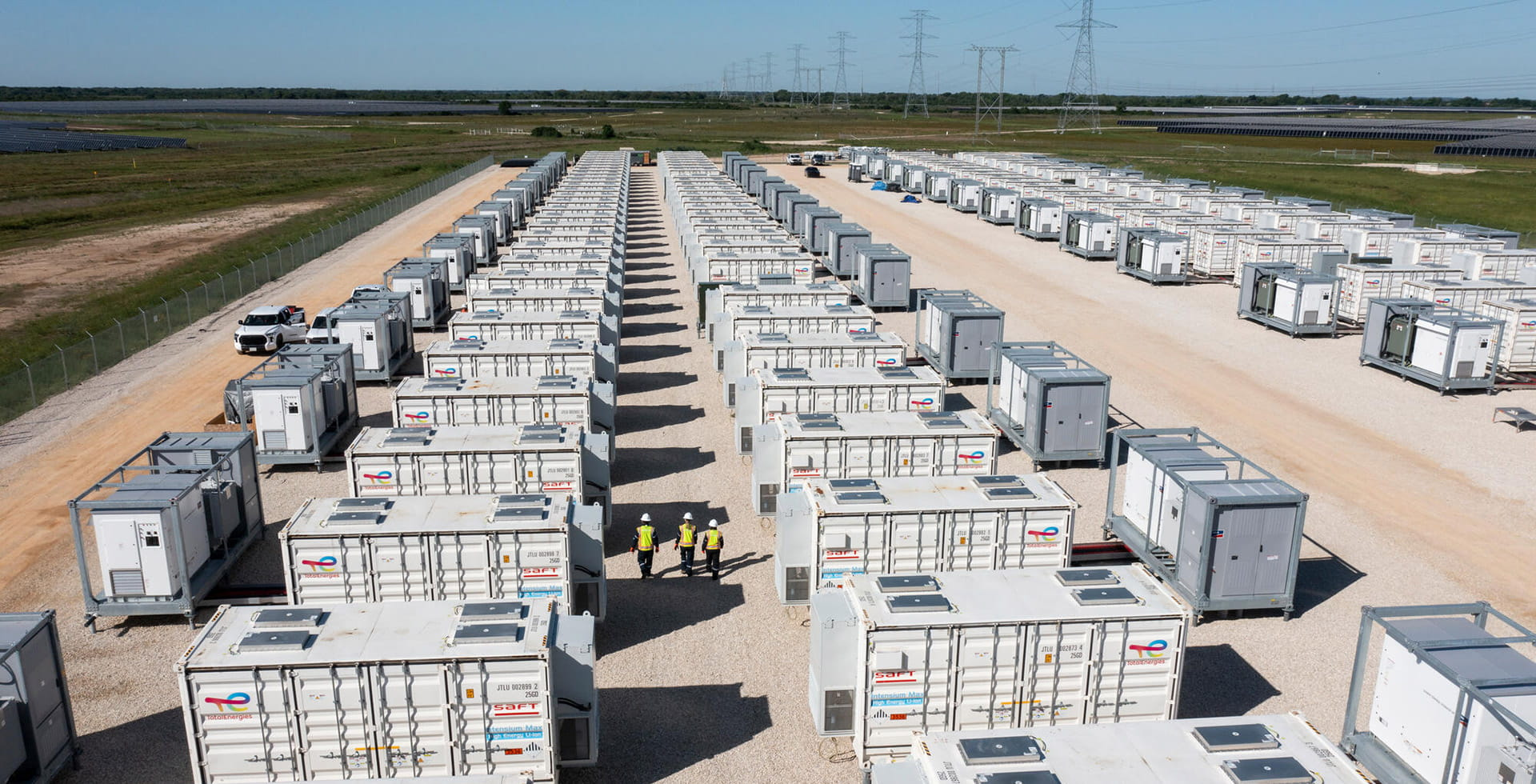
- The portfolio totals 789 MW and 1,628 MWh, with most sites using Saft batteries and TotalEnergies remaining as operator.
- The projects are aimed at easing congestion and adding flexibility as Germany pushes deeper into renewable generation.
TotalEnergies has agreed to sell a 50% stake in an 11-project battery storage portfolio in Germany to Allianz Global Investors, locking in a €500 million investment programme that will bring 789 MW and 1,628 MWh of utility-scale storage to market by 2028.
The projects are already under construction and were developed by Kyon Energy, the German battery storage specialist acquired by TotalEnergies in 2024. Most of the sites will use batteries supplied by Saft, another TotalEnergies subsidiary, while TotalEnergies will remain operator once the assets are commissioned. The financing structure is also notable, with 70% of the total investment set to be debt funded.
For AllianzGI, the deal marks its first direct equity investment in a portfolio of utility-scale battery storage projects. For TotalEnergies, it is a familiar model — recycle capital without stepping away from operations, then use the balance sheet for the next tranche of buildout. That structure has become increasingly relevant in storage, where project pipelines are expanding faster than many developers will want to hold on their own books.
The industrial logic is straightforward. Germany’s power system needs more fast-response flexibility as wind and solar capacity rises, and storage is increasingly being deployed as network infrastructure rather than as a niche balancing add-on. These 11 projects are intended to reduce grid congestion and provide the operational flexibility needed to support higher volumes of intermittent renewable output.
That matters in Germany more than in most European markets. It remains the region’s largest power market, and one where the pressure points are well known: uneven renewable generation, grid bottlenecks between regions, and a growing need for assets that can respond quickly without waiting for thermal plant starts or network reinforcement alone.
Battery projects on this scale do not solve those constraints by themselves, but they do change the system’s operating margin. Nearly 800 MW of storage spread across multiple sites gives network operators and traders a more useful tool for absorbing excess generation, shifting output, and stabilising flows during tighter periods. It also sharpens the commercial case for integrated power portfolios that combine renewables, storage, aggregation, and market access.
The portfolio is due to be fully operational by 2028, subject to the usual approvals and closing conditions. By then, the role of battery storage in Germany’s grid should be less theoretical and much more operational.