IN Brief:
- Electricity North West has advanced a £24 million programme in Salford with the installation of three 75-tonne, 132 kV transformers at Frederick Road.
- The work also includes replacing older oil-filled underground cables in Agecroft and Duchy Road with modern cable systems.
- The project is aimed at strengthening network resilience ahead of higher demand from electrified heat, transport, and urban growth, with completion stretching into 2027.
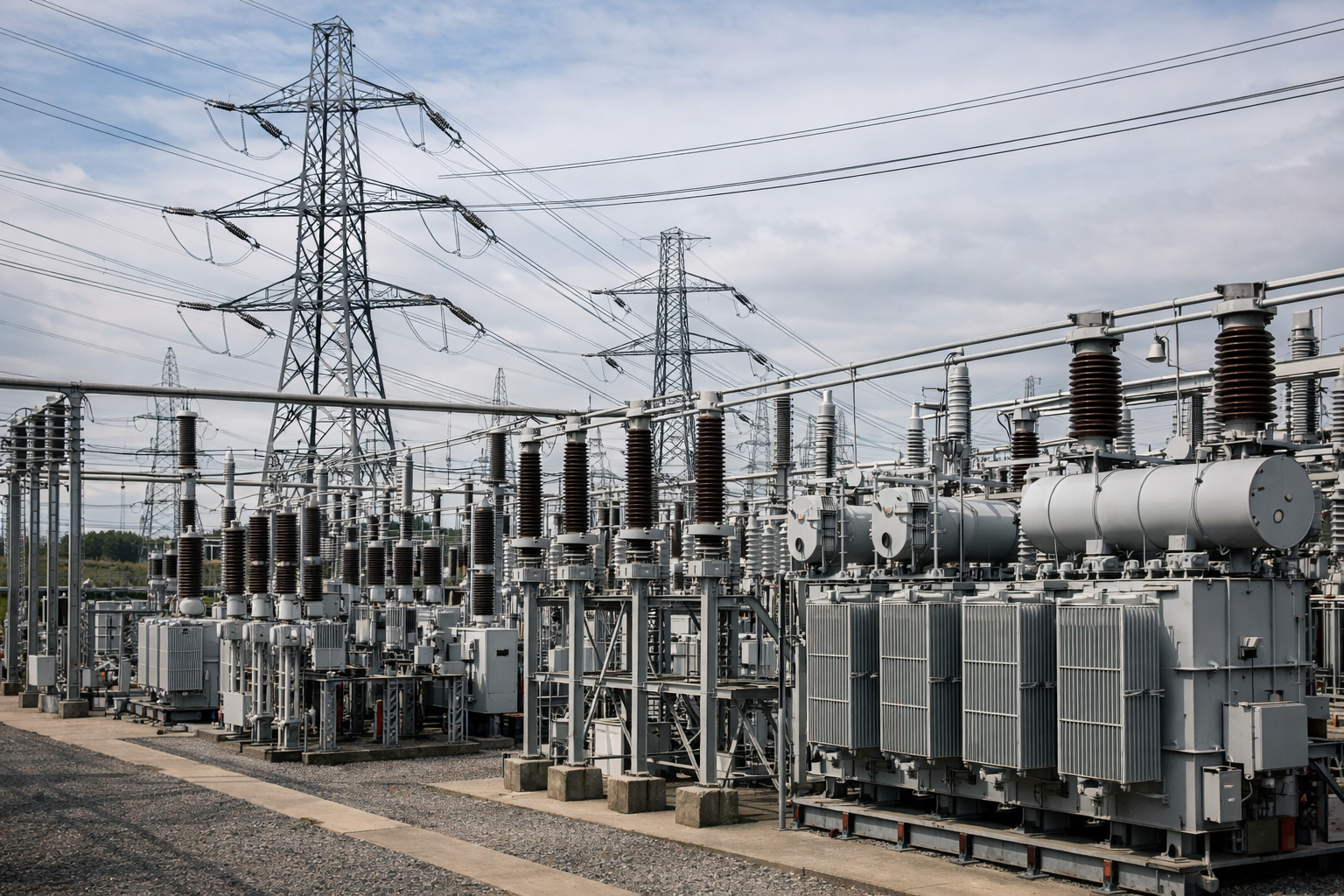
A major reinforcement project in Salford has reached a visible engineering milestone with the installation of three 75-tonne transformers at the Frederick Road substation.
The equipment forms part of a £24 million programme being delivered by Electricity North West to strengthen power transfer capability across Greater Manchester. The new assets are rated at 132,000 volts and will be connected to newly laid cables as the project moves through its next stages.
The transformer installation is only one part of the scheme. Underground works in Agecroft and Duchy Road are also progressing, with older oil-filled cables being replaced by modern systems intended to improve both reliability and environmental performance. That cable replacement work is more than routine asset renewal, because it removes older infrastructure that is increasingly ill-suited to higher loading, tighter resilience requirements, and the operational demands created by a more electrified heat and transport base.
Electricity North West has said the wider Salford upgrade will benefit more than 146,000 homes and businesses. The network case behind that investment is straightforward enough: Greater Manchester is adding more electric vehicle charging, more heat pumps, and more power-intensive development, while urban substations and legacy cable routes are being asked to carry a very different load profile from the one they were designed for.
Frederick Road is therefore becoming an important nodal point in a local grid that has to do more than simply keep pace with demand growth. It has to absorb sharper peaks, provide higher reliability, and offer more flexibility for new connections. The transformer delivery itself underlines the scale of the work. The units travelled more than 1,000 miles from Austria and required specialist transport before being positioned at the site.
Local disruption remains part of that process. Road closures and temporary traffic management are continuing in stages, with works moving through Duchy Road and into Agecroft later in the programme. Readers tracking the works locally can find project and traffic updates on the Salford investment page.
The timeline is not short. Underground cable works are due to complete in November 2026, while the substation upgrade is scheduled to run through to December 2027. That reflects the reality of urban reinforcement projects, where civil works, live-network interfaces, traffic management, and asset installation all have to be sequenced with limited room for error.
For Greater Manchester, the significance lies in the kind of grid this project is helping to build. Distribution reinforcement is becoming less about replacing ageing hardware in isolation and more about preparing dense urban networks for electrification at scale. Salford is one more example of that shift moving from planning documents into steel, cable, and plant.