IN Brief:
- Britain spent March confronting the physical limits of electrification, from swollen connection queues to network-equipment supply chains and locational charging reform.
- Across Europe, affordability and flexibility moved up the agenda, with the Commission pairing consumer protection with a fresh push on clean-energy investment and interoperable devices.
- For contractors, the market is becoming more regulated, more electrified, and more dependent on demonstrable competence in solar, storage, EV charging, and integrated building systems.
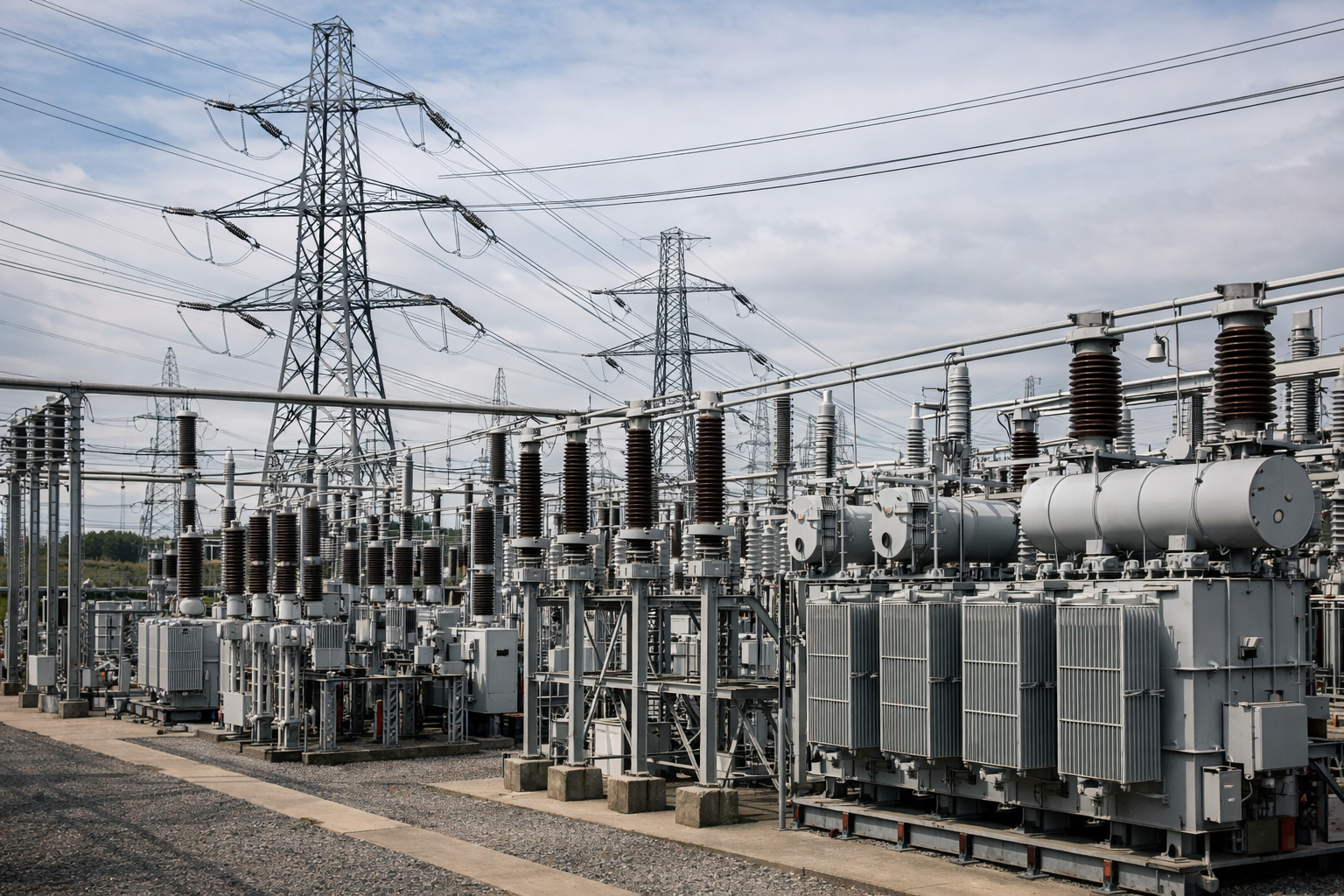
March did not lack for energy rhetoric, though the more consequential movement was elsewhere. In Britain, government and regulator spent the month wrestling with the mechanics that now sit beneath every serious electrification pledge: grid access, queue discipline, procurement resilience, and the price signals that shape where generation, storage, and demand actually land. The government’s 11 March intervention on speculative demand-connection applications was especially telling. A queue that had grown by 460% in six months, with waits stretching to 15 years, had become more than an administrative inconvenience; it was beginning to distort investment itself. When strategically important demand such as industrial sites, EV charging hubs, and data centres must compete with placeholders and speculation, the transition enters a more difficult phase in which system governance matters as much as generation targets.
That pressure carried through the rest of the month. Ofgem’s call for evidence on electricity-network supply chains described Great Britain as entering a once-in-a-century period of network expansion and proposed more standardised reporting on the procurement of electricity network equipment and services. A day later, the regulator opened its consultation on locational charges and regulatory siting levers under Reformed National Pricing, taking the debate deeper into the economics of where assets should connect and who should bear the consequences of poor siting decisions. March’s engineering story was therefore never confined to how many new megawatts might be announced by 2030. It was about transformers, cable, switchgear, substation equipment, manufacturing capacity, and the increasingly political matter of how a more spatially constrained electricity system is governed.
NESO’s March overhaul of the Demand Flexibility Service sat squarely within the same argument. Ofgem’s approval of a year-round design means the service can now reward participants for increasing demand when excess electricity is available, not only for shifting load away from peaks, while the threshold for participation has been lowered from 1 MW to 0.1 MW. That may appear procedural, but it carries wider significance. A system with more variable renewable generation requires demand to behave with greater precision, and a flexibility market capable of drawing in smaller commercial users and more aggregators is part of the operating architecture. Britain’s electricity engineering debate is moving away from headline capacity and towards the live choreography of a more complex grid.
Across Europe, the month’s centre of gravity lay in affordability and participation, though the underlying issue was again system design. The European Commission’s Citizens’ Energy Package, published on 10 March, set out measures intended to reduce bills, tackle energy poverty, and make energy markets easier for consumers to navigate. Published alongside it, the Clean Energy Investment Strategy placed the financing challenge in harder terms, with the Commission pointing to the scale of annual investment still required through 2030 and beyond. Europe’s March conversation was not simply about shielding households from volatility; it was about building an electricity system capable of offering cleaner power at scale without exhausting public tolerance or undermining industrial competitiveness.
That logic extended into the built environment. Under the revised Energy Performance of Buildings Directive rules on solar energy in buildings, all new buildings for which permit applications are made after 29 May 2026 must be designed to optimise solar generation. The Commission is explicit about the downstream uses of that electricity, from lighting and appliances to heat pumps, EV charging, storage, neighbourhood sharing, and export to the grid. In parallel, the Joint Research Centre’s March expansion of its interoperability code of conduct brought energy management systems, PV inverters, batteries, and home EV chargers into scope. These are not isolated device stories. They point towards an electrical market in which generation, load, storage, and control increasingly have to coexist at building level with far less friction than the sector has historically tolerated.
In the UK contracting market, March’s defining move was the publication of the Future Homes and Buildings Standards alongside the government’s push to bring plug-in solar into retail channels and place solar panels and clean heating at the heart of most new homes. The politics around the announcement were loud enough, but the more durable significance lies in what it means for electrical scope. The standards come into force on 24 March 2027 and apply across new homes and new non-domestic buildings. That shifts a great deal of value and responsibility towards design coordination, protection, controls, commissioning, testing, and network interface work. Electrical contracting is being drawn further into the centre of building-performance policy, whether or not every contractor has fully repriced that role.
Competence and market structure moved with it. ECA opened the month by issuing guidance on updated Electrotechnical Assessment Specification requirements, underscoring that compliance and competence are tightening around a market now shaped by low-carbon technologies rather than conventional installation alone. GOV.UK also confirmed that OZEV’s home and workplace chargepoint grants have been extended for a final year to 31 March 2027, with a streamlined set of schemes and higher grant rates from 1 April 2026. Commercially, the scale of the opportunity was visible in Bluewater to host UK’s largest EV charging hub, where a £24.5 million programme covering 1,000 bays across 28 Landsec destinations showed how routine charging work is giving way to larger, longer-horizon infrastructure frameworks with maintenance and upgrade obligations built in from the outset. March also brought a quieter sign of consolidation in Actemium’s rebrand of the former HAC and SGS switchgear businesses, a reminder that delivery capability in low-voltage distribution, panels, and associated control systems remains strategically valuable as the built environment electrifies.
Continental Europe offered a parallel development at smaller scale. Myenergi’s launch of its smart energy diverter in France would not, on its own, define the month, but it captured the direction of travel rather neatly. In a market where domestic export tariffs have fallen and a large installed base of electric hot-water systems already exists, self-consumption technology has acquired a clearer economic and technical rationale. Set against the Commission’s push on retail flexibility, solar-ready buildings, and interoperable devices, that kind of launch looks less like a neat product expansion and more like a sign that Europe’s household electrification market is becoming denser, smarter, and more responsive to price signals. The contractor implication is equally clear: the work increasingly sits at the junction of generation, storage, hot water, charging, and software rather than in single-technology silos.
What March ultimately exposed was a power sector that has moved beyond the comfort of target-setting and into a less forgiving stage of the transition. Britain’s arguments over queue reform, procurement visibility, flexibility design, and building regulation were all variations on the same theme: delivery now depends on the disciplines that sit between policy and steel. Europe approached the month from the consumer side, through affordability, investment, and device-level flexibility, but it arrived in a similar place. The energy transition is being shaped in the connecting tissue of the system — in standards, market design, equipment lead times, workforce competence, and the increasingly intricate electrical life of buildings. That is where March did its real work, and it is where the industry’s credibility will continue to be tested.