IN Brief:
- Europe’s public charging estate passed one million points in 2024, while operators face tighter uptime expectations on rapid networks.
- Fluke’s FEV500 is designed for fast DC charging stations, combining electrical safety, communication, and interoperability checks in one tool.
- Guided workflows, pass/fail results, and single-point connection testing aim to shorten service visits and reduce charger downtime.
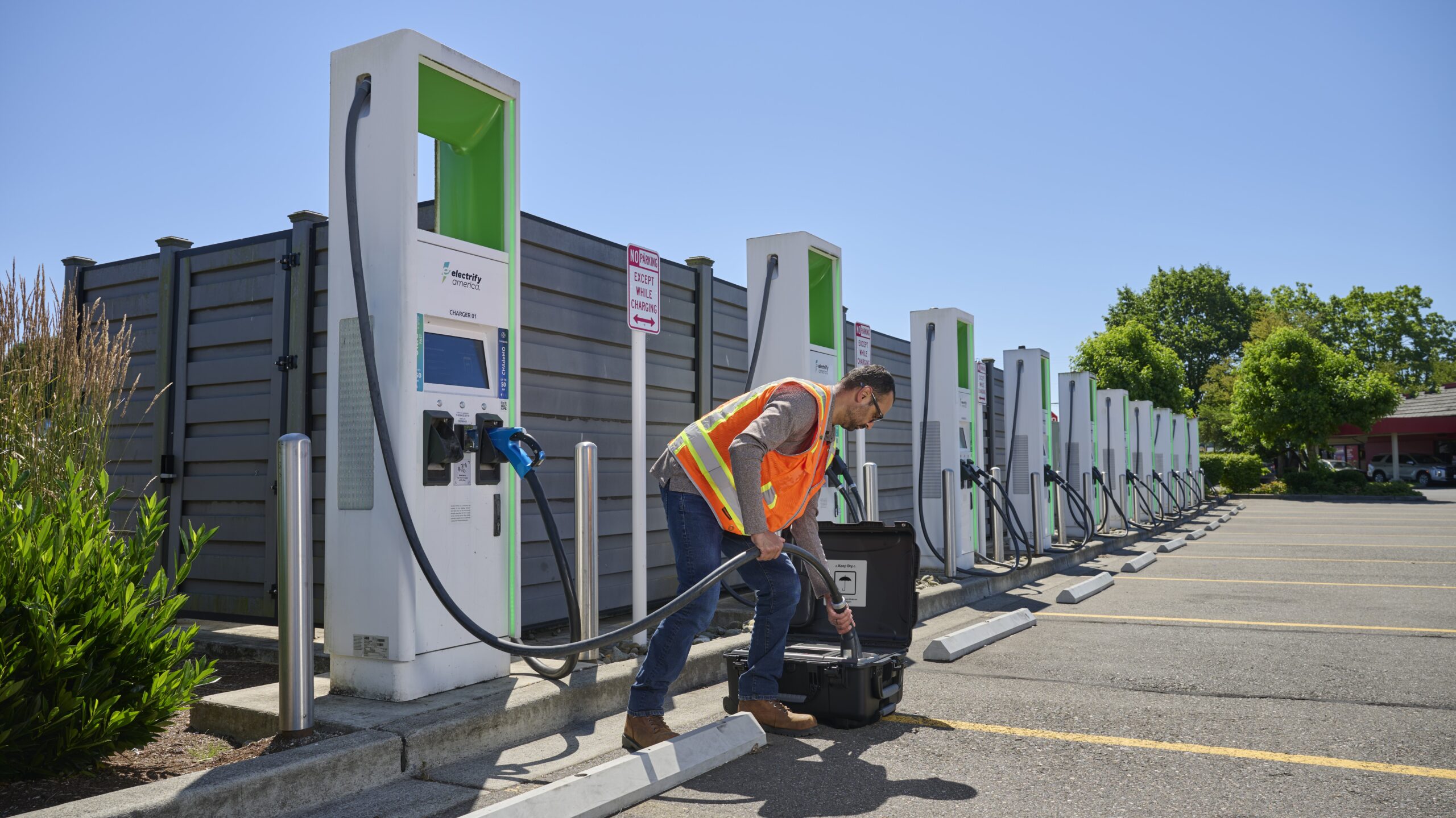
Fluke has launched the FEV500, a new analyser for fast DC EV charging stations that is built to act as a virtual vehicle during commissioning, troubleshooting, and maintenance. The tool is aimed squarely at the growing service burden around high-power charging, where electrical safety, digital communications, and interoperability all have to work at once.
The release lands as public charging infrastructure continues to scale. The IEA said Europe’s public charging stock grew by more than 35% in 2024 to just over one million charging points, while in the UK rapid networks are now subject to a 99% annual reliability requirement. That combination has pushed charger availability and repeatable test procedures much higher up the agenda for operators and service contractors.
Unlike AC chargepoint test adapters, the FEV500 is built for Level 3 DC equipment, where the hardware runs at much higher energy levels and the session itself depends on stable communication between the charger and vehicle. Fluke said the analyser combines continuity, insulation resistance, control pilot and proximity pilot checks, load testing, and insulation monitoring device tests in a single unit. It is designed around ISO 15118 and DIN SPEC 70121 communication protocols, allowing technicians to validate both electrical behaviour and digital handshakes in the field.
Martijn Gerlag, EMEA application engineer at Fluke Corporation, said: “With the FEV500, Fluke is redefining how fast DC EV charging stations are tested and maintained. These high-powered, complex stations are critical infrastructure, and ensuring their safety, reliability, and uptime is essential. Our all-in-one solution acts like a virtual electric vehicle, allowing technicians to diagnose, test, and validate stations on-site — reducing risk, accelerating service, and enabling the EV charging industry to scale with confidence.”
A large part of the appeal is procedural rather than purely technical. Fluke said the unit delivers guided test workflows and clear pass/fail results, reducing the need to assemble several instruments or rely on improvised site methods. The company also said testing can be carried out through a single connection point without opening the charger cabinet, which helps limit downtime and avoids unnecessary disassembly during routine diagnostics.
The analyser is housed in a wheeled chassis and uses a removable battery, making it more practical for field teams moving between depots and live sites. Fluke is also tying the unit into its TruTest software for automated data capture and reporting, a sign that EV charger servicing is moving into the same documented, auditable maintenance regime long familiar elsewhere in electrical infrastructure.