
IN Brief:
- ENEVO Group and Kraftfeld have signed an EPC contract for a 110MW / 220MWh battery energy storage project in Romania.
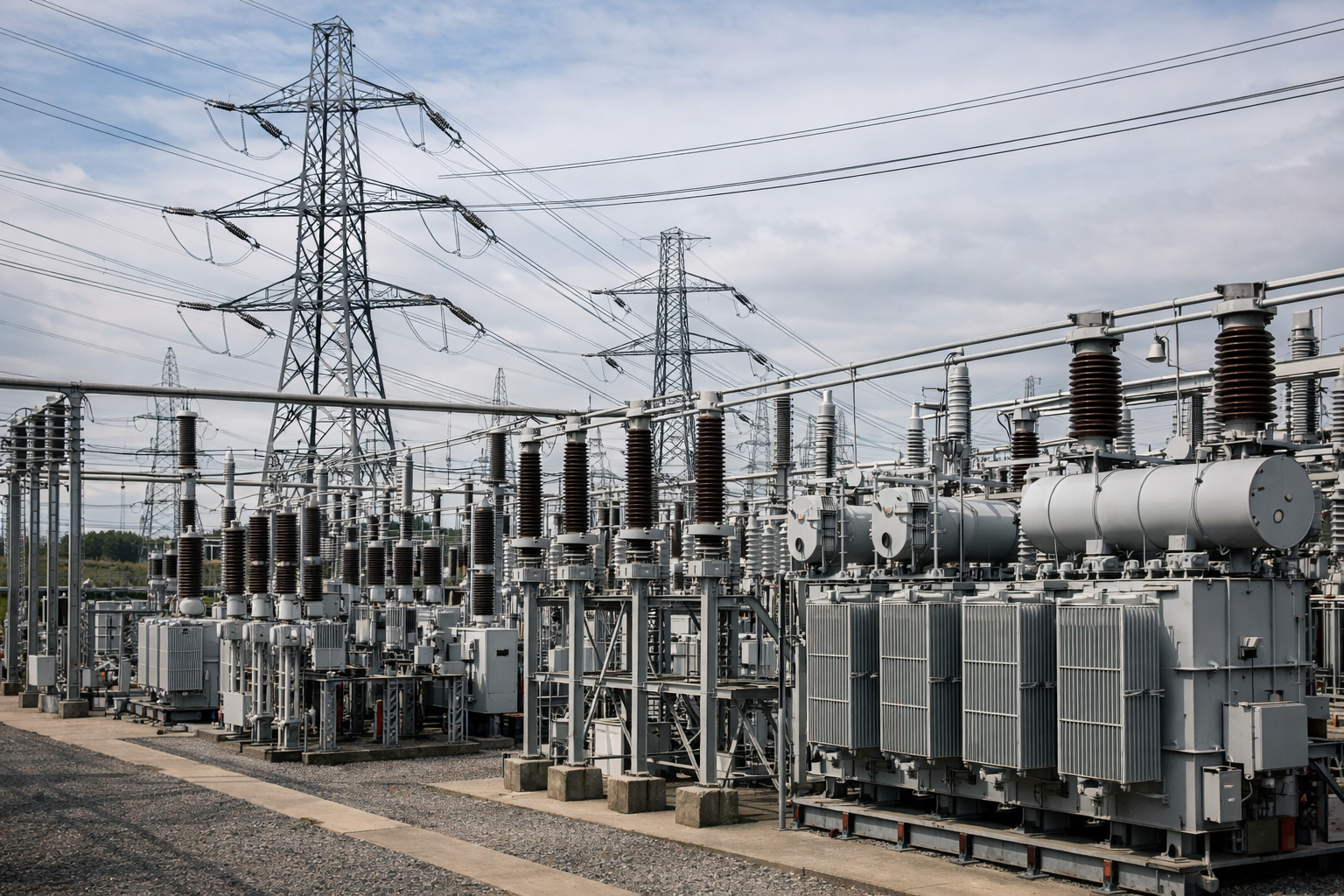
- The Drăgănești-Olt project includes the BESS facility and associated high-voltage substation.
- Construction is scheduled to begin in Q3 2026, with commissioning and commercial operation planned for early 2027.
ENEVO Group and Kraftfeld have signed an EPC contract for a 110MW / 220MWh battery energy storage system at Drăgănești-Olt in Olt County, Romania.
Kraftfeld is the project owner, while ENEVO Group will deliver the project as engineering, procurement, and construction contractor. The scope covers design, procurement, turnkey construction, the BESS facility, and the associated high-voltage substation and grid connection infrastructure.
The system will have a nominal discharge power of 110MW and storage capacity of 220MWh. It is designed to store and release electricity according to market conditions and the operational needs of Romania’s national energy system.
Construction is scheduled to begin in the third quarter of 2026, with commissioning and commercial operation planned for early 2027. The agreement was signed during Intersolar Europe 2026, adding another grid-scale project to ENEVO Group’s battery storage portfolio, which now exceeds 1GWh across projects under execution or already operational.
Romania has become an increasingly active market for renewable generation and storage development. Solar deployment, grid connection demand, and balancing requirements are creating a stronger role for batteries that can manage renewable variability, support flexibility, and participate in power markets.
The Drăgănești-Olt project places high-voltage integration at the centre of delivery. A battery project of this scale is not only a containerised storage installation. It requires transformers, switchgear, protection relays, metering, SCADA integration, fire safety systems, civil works, auxiliary power, commissioning procedures, and grid-code compliance.
The inclusion of the substation within the EPC scope gives the project a clearer delivery boundary. Grid connection is often the most difficult part of large storage deployment, particularly where network capacity, protection settings, fault levels, and system studies need to be coordinated with the grid operator. Battery capacity without a reliable high-voltage interface has limited practical value.
Storage economics across Europe are also moving beyond simple energy arbitrage. Large BESS assets can provide balancing services, reserve, capacity support, congestion management, and renewable integration, depending on market design and dispatch rules. Those revenue streams require control systems that can respond quickly while protecting battery health and meeting network requirements.
The Romanian market sits within a wider European shift toward utility-scale flexibility. In Scotland, a 2GWh battery storage project shows how large-scale systems are being developed around constrained renewable generation and transmission pressure. In continental Europe, battery systems are increasingly being planned around solar build-out, balancing needs, and market volatility.
Central and Eastern Europe brings its own grid conditions. Renewable resource locations, legacy network topology, interconnection capacity, local demand patterns, and market reform all shape where storage delivers the most value. A well-located battery can absorb power during oversupply, release energy during high-demand periods, and reduce stress on constrained network sections. A poorly integrated one can add another controllable asset without solving the underlying bottleneck.
That distinction places more weight on engineering execution. Protection coordination, grid studies, power conversion performance, harmonic management, communications, cyber security, thermal design, and operational control all affect how the system behaves once energised. A battery plant must operate as part of the network, not simply alongside it.
Supply-chain coordination will also shape the delivery programme. Grid-scale storage projects depend on battery cells, racks, power conversion systems, transformers, switchgear, cabling, fire detection, suppression, building works, software, and commissioning resources. European storage demand has grown quickly, making delivery capability a more visible constraint than project announcements alone.
As more renewable capacity connects in Romania, flexibility assets will need to prove their value under actual operating conditions. Installed capacity is only the starting point. Dispatch performance, availability, degradation management, market participation, and response to system needs determine long-term usefulness.
The Drăgănești-Olt contract moves the project into a practical delivery phase with defined EPC responsibility and a planned route to energisation. If construction and commissioning proceed as scheduled, the system will add a sizeable storage asset to Romania’s grid by early 2027, supporting a power system that is becoming more renewable, more flexible, and more dependent on high-quality grid integration.

