IN Brief:
- China is preparing for roughly 5 trillion yuan of electricity network investment over the next five years, with State Grid alone planning 4 trillion yuan in fixed-asset spending.
- The build-out is geared toward west-to-east power transfer, stronger urban and rural distribution networks, and better integration of fast-growing renewable capacity.
- The scale of financing underlines how central grid infrastructure has become to industrial policy, energy security, and the practical delivery of large renewable build programmes.
China is entering a new phase of grid expansion that could take electricity network investment to around 5 trillion yuan over the next five years.
The core of that programme sits with State Grid Corporation of China, which has already set out plans to invest 4 trillion yuan in fixed assets between 2026 and 2030. The wider direction of travel is clear: transmission and distribution are being treated as strategic infrastructure on the same level as generation build-out.
The immediate driver is the pressure created by scale. China is still adding renewable generation at a pace no other market matches, but generation capacity alone does not solve the problem if electricity cannot be moved efficiently from resource-rich western regions to coastal and industrial demand centres in the east. That is why west-to-east power transfer remains central to the investment programme, particularly through long-distance high-voltage corridors.
State Grid’s latest plan implies average annual spending of around 800 billion yuan, above the previous record of 650 billion yuan in 2025. The company is also targeting a 30% increase in cross-provincial and cross-regional transmission from end-2025 levels. Alongside the long-distance backbone, funding is expected to flow into urban and remote-area distribution networks and into alternative models such as off-grid and microgrid development.
The financial dimension is almost as striking as the engineering one. Grid operators have become some of China’s largest bond issuers as network expansion accelerates, and that reflects the sheer capital intensity of building infrastructure able to absorb more wind and solar while maintaining supply security. In practical terms, the network is being rebuilt not only to carry more electricity, but to handle a more variable, more geographically dispersed, and more electrified economy.
Recent geopolitical stress has added urgency. Reports linked the renewed push partly to concerns over imported fuel exposure as tensions in the Middle East raised another reminder that energy security is shaped as much by infrastructure resilience as by commodity access. For China, a stronger domestic grid reduces curtailment, cuts dependence on coastal fossil generation in some regions, and makes better use of inland renewable resources that would otherwise remain constrained.
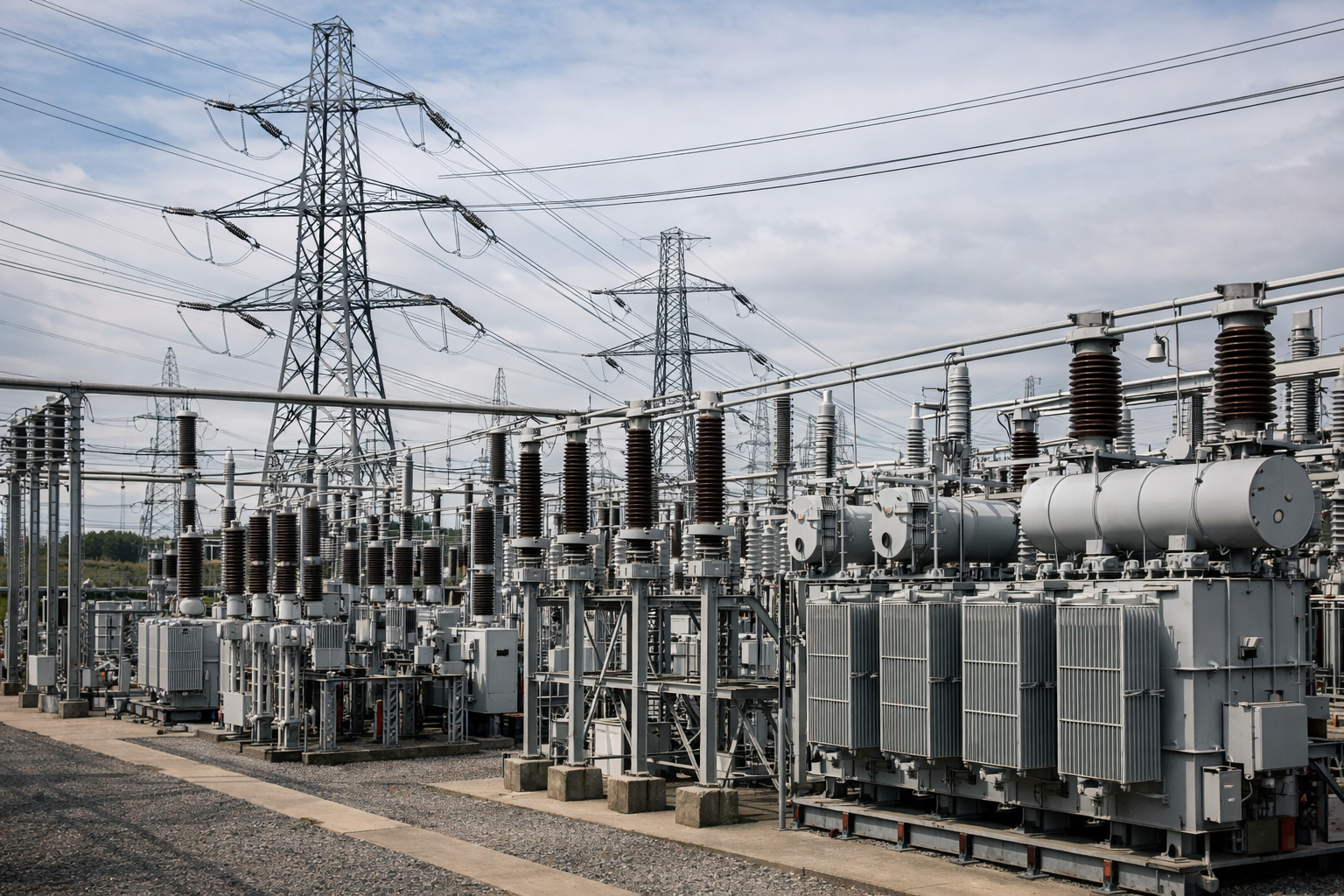
The consequences extend well beyond China’s borders. Investment at this scale supports demand for transformers, switchgear, conductors, grid software, protection systems, and high-voltage engineering services across one of the world’s largest power markets. It also reinforces a basic truth that many other countries are still wrestling with: renewable deployment targets can be announced quickly, but grid capacity is what determines whether they turn into delivered electricity.
That is why the most important number in China’s energy transition may not be the next wind or solar target. It may be the amount being poured into the network that has to carry the whole system.