IN Brief:
- Allye has joined Tech Nation’s 2026 Climate Programme as part of a 25-company cohort focused heavily on hardware-led climate technologies.
- The company’s storage portfolio targets constrained-grid and off-grid applications, using repurposed EV battery packs and AI-led energy management.
- The selection gives Allye greater visibility as flexible storage becomes more important in EV charging, construction, industrial power, and temporary energy supply.
Allye Energy has been selected for Tech Nation’s 2026 Climate Programme, placing the London battery storage developer in a 25-company cohort built around hardware, industrial decarbonisation, and other deep-tech climate businesses.
The four-month programme is aimed at Seed and Series A companies. Tech Nation says the 2026 cohort has raised more than $250 million collectively, employs more than 370 people, and includes a strong hardware bias, with 23 of the 25 companies building in hardware or life sciences.
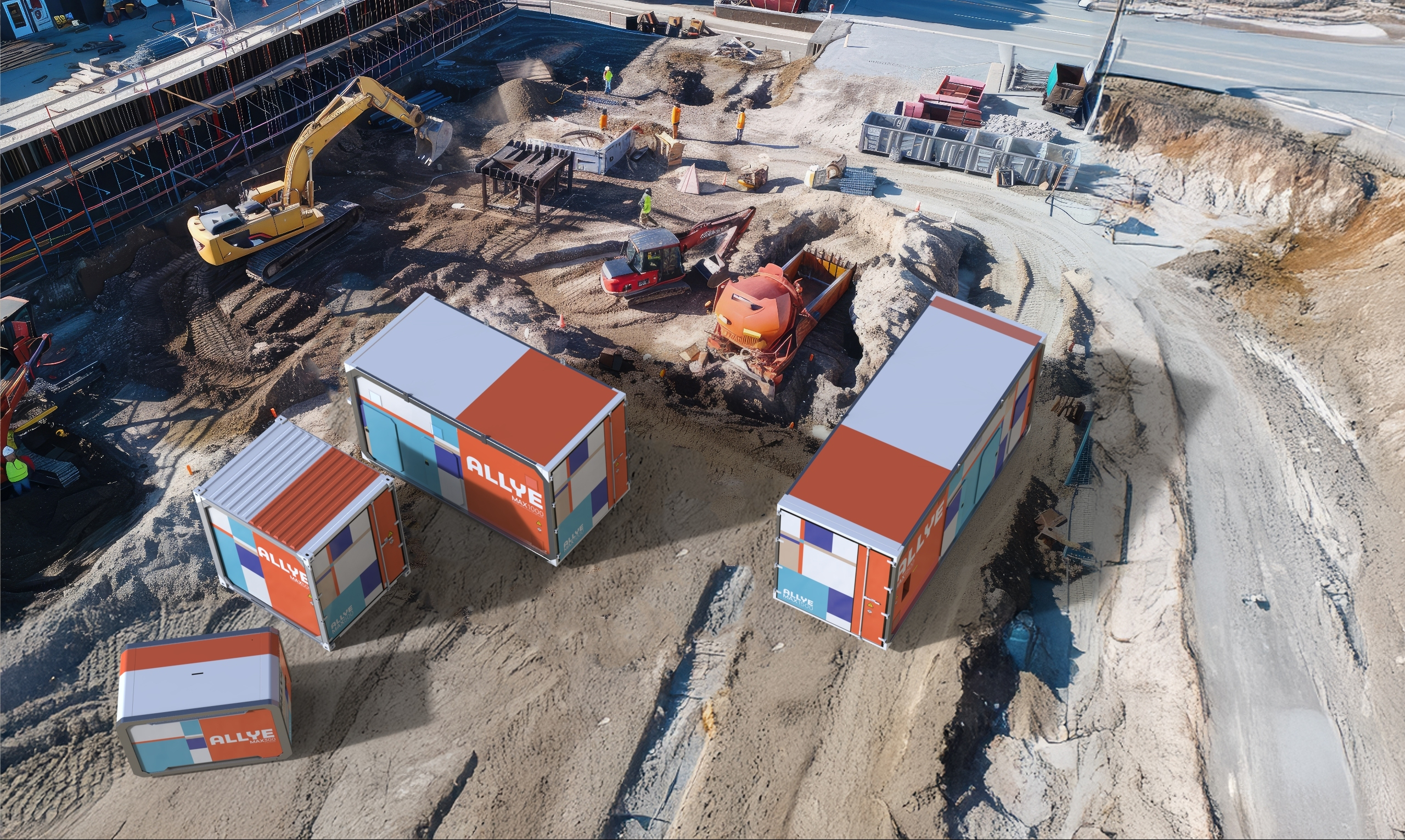
Allye is building mobile and stationary battery systems for locations where electrification is moving faster than network reinforcement. Its MAX300 platform delivers 300kWh of usable energy, while the larger MAX1000 offers about 984kWh with power options up to 840kW. A MAX1500 variant remains in development at 1.476MWh and up to 1.26MW, extending the range into megawatt charging territory.
The product strategy is centred on repurposed EV battery packs and an AI-led control platform designed for forecasting, peak shaving, arbitrage, flexibility services, grid-forming operation, and bi-directional power control. The company has already applied that model across several constrained-use cases, including Roadchef’s Killington Lake motorway services, Aerovolt’s charging site at Dunkeswell Aerodrome, remote EV support for Jaguar Land Rover, construction deployments with Collins Earthworks, and mobile power for film and television productions.
The programme gives Allye greater visibility with investors, corporates, and policymakers at a point when temporary and distributed storage is moving into the mainstream of connection reform and flexible capacity planning. For developers operating between slow reinforcement cycles and fast-rising electrification demand, that is where commercial traction is increasingly being built.