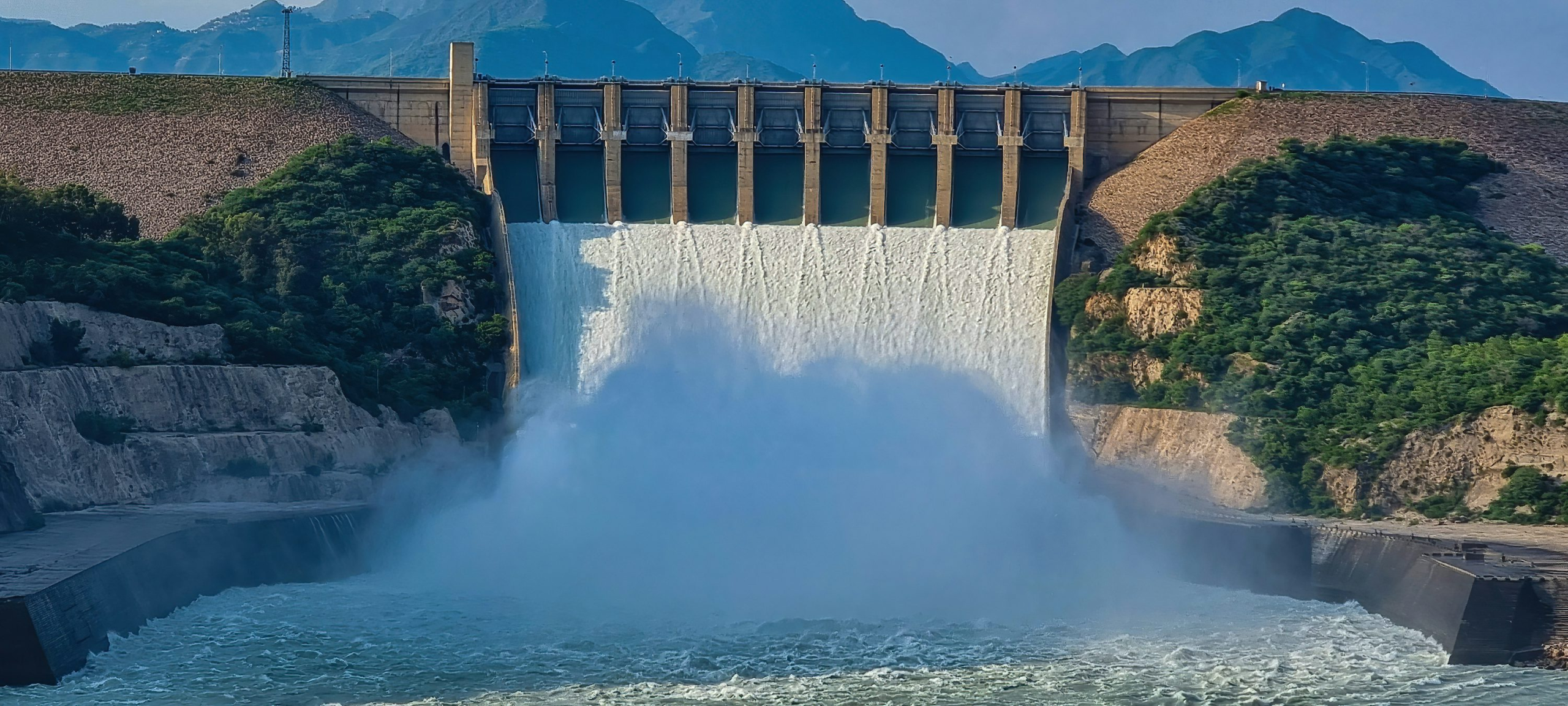
IN Brief:
- Jordan has issued the request for qualification for a 450MW pumped hydro project adjacent to the existing Al-Mujib Dam.
- The closed-loop concept uses two 225MW reversible units and is specified to provide seven hours of storage at full load.
- Applications for qualification close on 18 January 2027, ahead of a restricted request for proposals to shortlisted bidders.
Jordan’s Ministry of Investment has launched prequalification for a 450MW pumped hydro energy storage project beside Al-Mujib Dam, opening the first formal competition to select a private sector partner for a facility intended to support the country’s electricity system. The Al-Mujib scheme is proposed under a build-own-operate-transfer model, with an initial request for qualification followed by a request for proposals for shortlisted applicants.
The ministry published the invitation on 15 October 2026. Prospective bidders have until noon Jordanian local time on 18 January 2027 to submit applications for qualification. The call is not a construction contract, financial close or final investment decision. It establishes the eligibility stage of a procurement process in which technical and financial proposals will be sought subsequently from parties that meet the initial requirements.
The proposed installation has a maximum generating output of 450MW and is specified to deliver seven hours of storage at full load. Multiplying its rated output by that duration gives a nominal discharge equivalent of 3,150MWh, although this is an arithmetic expression of the stated design duty rather than an independently confirmed usable electrical-energy rating. Real output over an operating cycle would depend on reservoir conditions, operating restrictions and the final design.
Jordan’s official news agency has described two reversible pump-turbine units of 225MW each. It says the proposed plant would circulate water between upper and lower reservoirs through pressure conduits, reusing the same water in a closed-loop arrangement. The units would convert electrical energy to stored gravitational energy when pumping and reverse the process when generating; the equipment configuration remains a proposed design rather than a commissioned installation.
When electricity is plentiful, power from the grid would drive the pump-turbines in pumping mode, moving water from a lower reservoir to one at greater elevation. The stored water gains gravitational potential energy. At periods of high electricity demand, the flow would be reversed through the hydraulic machinery to generate electricity and deliver it back into the network. The cycle necessarily consumes more electrical energy during pumping than it can subsequently return during generation.
The ministry has identified surplus daytime solar generation as one of the intended charging sources, with discharge during higher-demand periods. Seven hours at full power is materially different from the shorter discharge durations often associated with grid batteries, although the two technologies may serve different operational functions. Pumped storage requires suitable topography, civil structures and water-management measures that are not needed by a battery installation; batteries have their own requirements for thermal control, fire protection and electrical conversion equipment.
The adjacent Al-Mujib Dam provides an established geographic reference, but its presence does not mean the planned storage facility is already built or that all necessary hydraulic infrastructure can be reused without new works. A closed-loop layout still requires two reservoirs or suitable water bodies, connections between them, pressure tunnels or pipes, rotating machinery, electrical equipment and grid connection facilities. The precise final layout and procurement obligations are matters for the project documentation and subsequent design.
Reversible hydraulic machinery must operate within reservoir level, flow, pressure and electrical limits set by the final design. Pumping and generation have different hydraulic duties, and transitions between them require coordinated valve, turbine, electrical breaker and protection sequences. Rapid changes in flow can produce pressure transients in conduits, while repeated starts impose mechanical and electrical loads. The later design and commissioning stages will establish the acceptable operating envelope rather than the qualification tender itself.
The 450MW rating expresses maximum intended generating power, whereas the seven-hour design duty specifies the planned full-load discharge period. Their product is a nominal 3,150MWh output equivalent, not a separately guaranteed net usable-energy capacity. The period achievable in practice would depend on the starting water level, operating limits, system losses and grid dispatch requirements. Similarly, storing surplus solar electricity will depend on its actual availability at the time of pumping, not simply the installed capacity of photovoltaic generation in Jordan.
The public-private partnership arrangement places the proposed development, finance, construction, ownership, operation and maintenance obligations within a contractual model that ends in transfer of the asset. The ministry refers to Jordan’s 2023 public-private partnership law and its implementing regulation. Commercial arrangements, financing and risk allocation remain to be settled during the later stages of the competition; the qualification invitation alone does not identify the winning bidder or determine the project’s eventual capital cost.
The programme is intended to improve the ability of Jordan’s electricity system to absorb variable renewable generation without requiring output and demand to coincide in every hour. It could also provide a dispatchable source of capacity during evening peaks, subject to the operating envelope and the grid connection. The level of actual renewable integration or fuel-import displacement would depend on how the system is dispatched and on the generation mix when charging electricity is consumed.
Applications for qualification must reach the ministry by 12:00 Jordan local time on 18 January 2027. The government will then assess eligibility and invite shortlisted applicants to a subsequent request-for-proposals stage for technical and financial bids. No preferred bidder, construction contract, financing close or commercial-operation date has been established by the October RFQ.