IN Brief:
- Nordex has secured several Turkish wind orders totalling 389MW and 56 turbines.
- All machines will use the Delta4000 platform, with configurations selected for conditions at each project.
- Installation and commissioning will run in stages from 2027 through 2028.
Nordex has secured several wind turbine orders in Türkiye totalling 389MW, covering 56 Delta4000 machines together with installation and service agreements lasting several years.
The orders were placed during the final weeks of September and cover several projects rather than a single wind farm. Nordex has not disclosed the customers, individual project capacities, or exact turbine variants. Installation and commissioning are scheduled to begin during 2027 and continue in stages through 2028.
Nordex says each turbine type and configuration has been selected around the wind conditions, technical requirements, and physical characteristics of its site, including energy storage where relevant. That selection process affects far more than nameplate output because rotor size, hub height, control settings, transport constraints, foundation loads, and electrical requirements all have to fit the location in which the machine will operate.
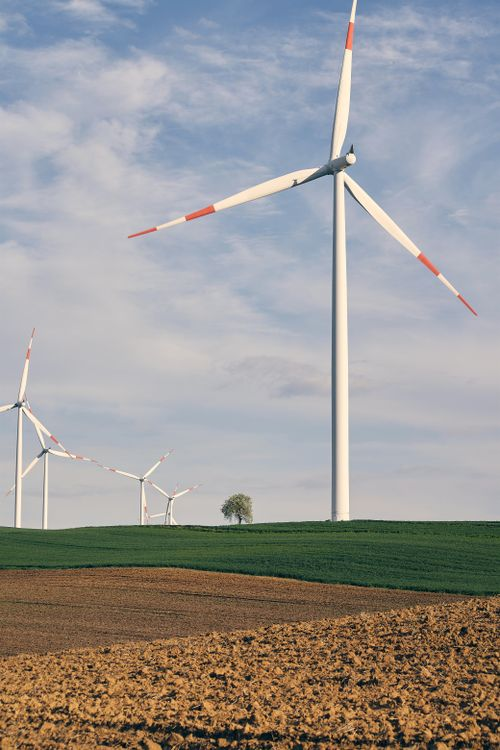
All 56 turbines will come from the Delta4000 platform. Nordex uses that common product architecture across several turbine ratings and rotor combinations, allowing projects to select different machines while retaining common elements in controls, drivetrain design, servicing, and parts support. The latest announcement does not identify which variants have been allocated to the Turkish projects.
The undisclosed mix also means the 389MW total should not be divided into 56 identical turbine ratings. Different projects can use different machine configurations, and Nordex has explicitly said that the turbines were selected for their individual sites. The total order value therefore describes the combined capacity of several project packages rather than one standardised fleet.
Wind resource is one of the main inputs to that selection. Rotor diameter determines the area swept by the blades, while hub height affects the wind regime encountered by the turbine. A larger rotor can increase energy capture at lower wind speeds, but it also changes structural loads, transport requirements, crane demand, and spacing between machines. Turbine choice therefore has to balance annual energy production against the practical limits of each site.
Electrical design changes with the selected machine as well. Turbines feed their output into an internal collection network before power is transformed and exported to the external grid. Cable ratings, transformer capacity, switchgear, protection settings, and reactive power requirements all depend on the size and arrangement of the wind farm. Projects that also include battery storage need an additional control layer to coordinate charging, discharging, turbine output, and the limits of the grid connection.
Service agreements are included in every new Turkish contract. Availability has a direct effect on energy yield because a turbine cannot capture the available wind resource while it is stopped for corrective work. Scheduled maintenance, remote diagnostics, fault response, and parts logistics therefore sit alongside turbine performance when developers assess output over the operating life of a project.
The 389MW package follows a separate 525MW Turkish order announced in August for Türkerler Holding’s YEKA-5 R25 Sivas project. That contract covers 72 N175/6.X turbines on 108 metre hub heights, with the first installation planned for the third quarter of 2027. Nordex said the Sivas order took its cumulative share of the Turkish wind market to 34%.
The manufacturer has also continued to add orders elsewhere in Europe. A separate 228MW European package announced this week covers 35 turbines across several markets, adding another delivery programme to the company’s 2027 and 2028 manufacturing schedule.
Transport and erection impose another set of limits on the final machine choice. Blades, tower sections, nacelles, and hubs must reach each site through roads and ports that can accommodate their dimensions and weight, while cranes need sufficient capacity and working area to assemble the turbines safely. Those constraints can rule out configurations that otherwise appear attractive on energy yield alone.
Project execution will depend on more than turbine production. Foundations, access roads, internal cables, substations, transport routes, and grid connections have to be ready in the correct sequence before machines can be erected and commissioned. Delays to civil works or network infrastructure can leave completed turbines unable to begin testing even when manufacturing has remained on schedule.
The staged 2027 to 2028 programme spreads the new Turkish orders across several project timelines, but the engineering requirements remain specific to each site. Nordex has disclosed the combined capacity, turbine count, platform, and delivery period; the individual turbine ratings, storage configurations, and connection arrangements will become clearer only as the projects move further into execution.