IN Brief:
- Coalburn 1 provides 500MW of power and 1GWh of lithium-ion storage at a transmission-connected site.
- CIP describes the South Lanarkshire installation as Europe’s largest operational battery.
- Coalburn 2 and Devilla would take CIP’s Scottish battery portfolio to 1.5GW/3GWh.
Copenhagen Infrastructure Partners has brought the 500MW Coalburn 1 battery energy storage system into commercial operation in South Lanarkshire, adding 1GWh of two-hour storage to Britain’s transmission-connected power system. CIP describes the lithium-ion installation as the largest operational battery project in Europe.
The project has been developed through Copenhagen Infrastructure IV and is the first operational element of a three-site Scottish battery portfolio. Coalburn 2 and Devilla are each being developed at a similar scale, which would take the combined portfolio to 1.5GW of power capacity and 3GWh of stored energy once all three sites are operating.
Coalburn 1’s 500MW rating determines the maximum rate at which the plant can charge or discharge, while its 1GWh energy capacity allows full output to be sustained for approximately two hours. Both figures matter when assessing grid storage: power determines the size of the immediate response available to the system, while energy determines how long that response can continue.
The project enters service as Scotland accommodates substantial wind generation alongside a transmission network that can become constrained during periods of strong renewable output. Batteries do not increase the thermal transfer capacity of an overloaded circuit, but they can change when electricity crosses the network by absorbing power during one period and releasing it later.
At 500MW, those charging and discharging decisions become significant at transmission-system scale. Maximum charging creates a load comparable with a large industrial demand centre, while maximum discharge injects the same order of power into the grid. Protection, metering, communications, plant controls, and coordination with the system operator therefore have to manage an asset that can move rapidly between being a major consumer and a major generator.
Coalburn 1 can potentially operate across wholesale trading, balancing, frequency-response, and other flexibility markets, subject to qualification and commercial arrangements. Its control system has to allocate a finite state of charge between those opportunities while accounting for efficiency, cell temperature, degradation, contractual availability, and the need to retain enough energy or charging headroom to respond when required.
The two-hour duration reflects the role currently occupied by much of Britain’s lithium-ion fleet. Batteries in this range can shift energy between neighbouring periods and respond quickly to short-term system conditions, but they are not designed to cover prolonged wind droughts or other multi-day deficits. Their contribution sits alongside interconnectors, demand flexibility, pumped storage, network reinforcement, and dispatchable generation rather than replacing those resources.
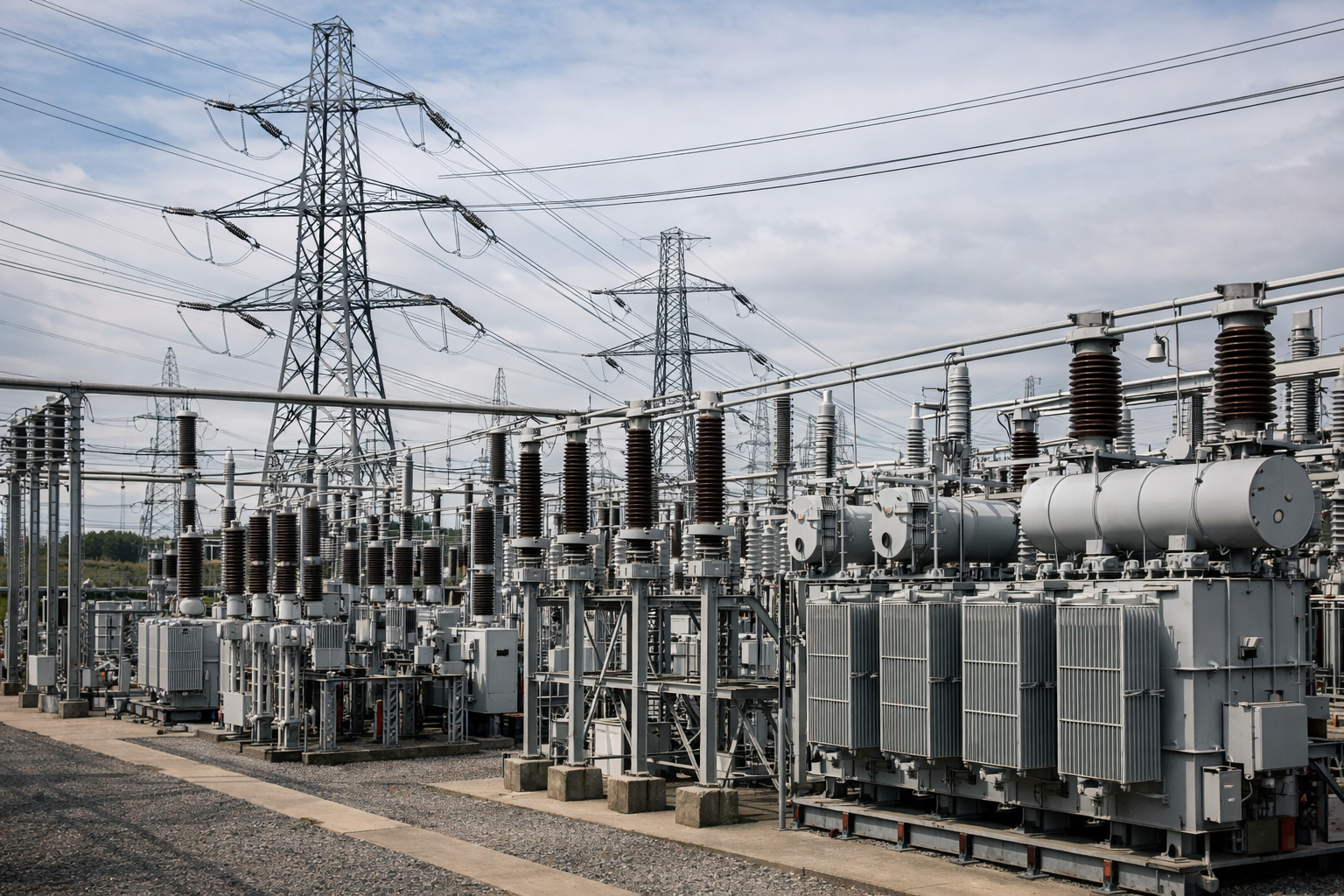
Scale brings operational concentration as well as flexibility. Coalburn 1 aggregates a large number of battery modules, inverters, auxiliary systems, and control equipment behind a single grid connection. Thermal management, fire detection and suppression, power-conversion reliability, cell monitoring, and auxiliary supply all have to perform consistently across a plant whose unplanned loss could remove hundreds of megawatts from the available flexibility fleet.
Commercial operation is consequently a more significant threshold than completion of physical construction. The site has progressed through electrical installation, energisation, protection testing, controls validation, and commissioning to the point where it can participate as an operating power-system asset. Availability, round-trip efficiency, degradation, and dispatch accuracy now replace construction progress as the important performance measures.
The planned Coalburn 2 and Devilla projects would magnify those considerations. Three 500MW systems under a common investment platform could collectively move 1.5GW of power and hold 3GWh of energy, creating scope for portfolio optimisation across different system and market conditions. Capacity of that order also makes battery behaviour more relevant to transmission planning, reserve procurement, and real-time system operation.
Britain is expanding storage at the same time as transmission owners undertake a much larger network reinforcement programme. The two investments solve different parts of the same problem: new circuits increase the amount of electricity that can move between regions, while batteries alter the time at which that movement occurs. Neither eliminates the requirement for the other where structural congestion is severe.
Coalburn 1 is now an operating test of that relationship. Its significance is not simply a claim to a European size record, but the arrival of 500MW of controllable power at a point on the Scottish system where renewable generation, transmission constraints, and growing flexibility requirements increasingly intersect.