
IN Brief:
- RWE and PPC have completed commissioning of three large-scale photovoltaic clusters in Western Macedonia, Greece.
- The nine solar farms have a combined capacity of 930MWp, or 884MWac, and are located within the former Amynteo lignite mining area.
- The joint venture partners are also constructing two further projects in Central Macedonia totalling 567MWp, with commissioning expected in 2027.
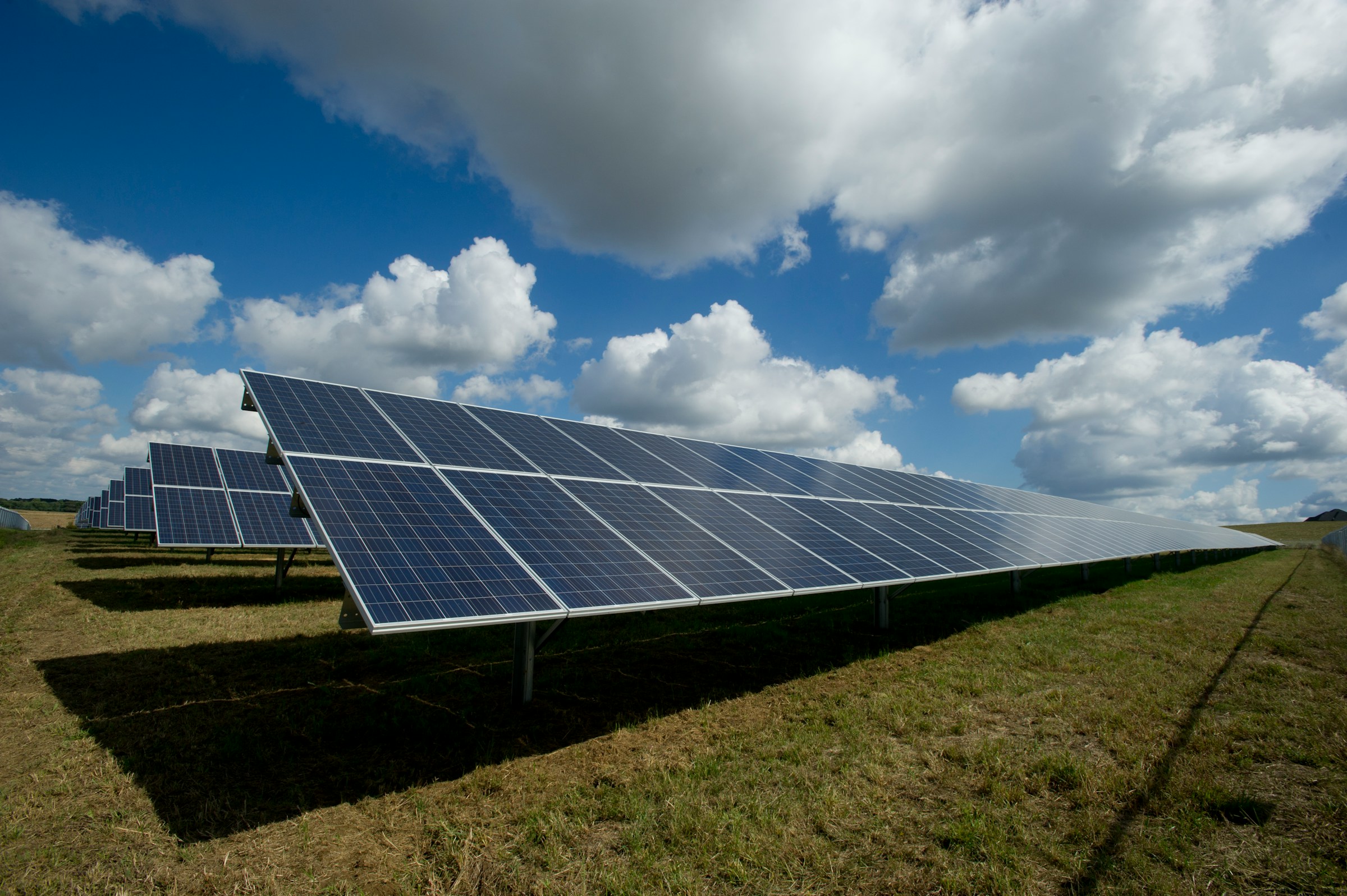
RWE and PPC have brought 930MWp of solar capacity into operation in Northern Greece, completing three large-scale photovoltaic clusters within the boundaries of the former Amynteo open-cast lignite mine in Western Macedonia.
The portfolio consists of nine solar farms developed, constructed, and commissioned by Meton Energy S.A., a joint venture owned 51% by RWE and 49% by PPC. The completed sites have a total capacity of 930MWp, equivalent to 884MWac, and are expected to generate enough electricity to meet the annual demand of more than 400,000 Greek homes.
Two additional solar projects are now under construction in Central Macedonia. The Kotyli and Neo Syrakio solar farms will have a combined capacity of 567MWp, or 518MWac, and are expected to enter operation in 2027. Their annual generation is expected to meet the needs of more than 240,000 Greek homes.
By reusing former lignite land, the completed portfolio gives Greece a large practical example of coal-region repurposing. Western Macedonia has long been associated with lignite-based power generation, and the conversion of former mining land into solar generation changes the electrical, economic, and land-use profile of the region. It also reduces the pressure to identify entirely new greenfield sites for every large renewable project.
The project adds scale to a European solar market increasingly shaped by grid access, land availability, storage integration, and capture-price exposure. Large solar clusters can deliver substantial low-cost generation, but they also concentrate export requirements into specific grid nodes. Their system value depends on connection capacity, curtailment risk, local demand, balancing arrangements, and the availability of flexibility.
Solar deployment is also moving closer to storage and power-electronics integration, with equipment platforms such as integrated European BESS systems increasingly designed around utility-scale renewable projects. The hardware direction now extends beyond photovoltaic modules alone. Large solar portfolios require a coordinated view of modules, inverters, power conversion systems, transformers, switchgear, controls, forecasting, storage, and grid-support functions.
RWE and PPC’s next phase in Central Macedonia also underlines the portfolio nature of renewable delivery. Large renewable programmes are rarely single events. They are built as sequences of projects, with grid studies, land arrangements, procurement, construction work, commissioning, and operational handover repeated across multiple sites. Standardised delivery can reduce risk, although each connection point and local network condition still has to be engineered individually.
The former lignite context carries technical as well as symbolic weight. Legacy power regions often have existing grid infrastructure, substations, roads, industrial land, and skilled workforces, but the electrical behaviour of solar generation differs sharply from thermal plant. Solar output is weather-dependent, inverter-based, and concentrated during daylight periods. That changes voltage control, balancing needs, dispatch patterns, and the way network capacity is used across the day.
Storage is likely to take a larger role as more solar capacity connects across Greece and the wider region. PPC has set out ambitions to increase renewables and integrate energy storage into its portfolio. At higher solar penetration, batteries and other flexibility assets can help shift output from peak generation periods, reduce curtailment, and support local network operation, although their value depends on market design and grid location.
Large-scale projects also draw heavily on the supply chain. Solar farms of this size require module supply, mounting structures, inverters, medium-voltage equipment, high-voltage connection works, monitoring systems, civil contractors, environmental management, and operations teams. Hundreds of direct and indirect construction roles were created during the Greek build-out, and that labour dimension remains central to renewable delivery across Europe.
The commissioning of the Amynteo clusters strengthens Greece’s renewable generation base while showing how former fossil-energy regions can be reused for utility-scale power infrastructure. The next phase will depend on how effectively generation, storage, transmission access, and local economic transition are managed as further capacity enters the system.

