
IN Brief:
- A contract worth about €770m has been awarded for converter stations on the Elmed HVDC interconnection.
- The 600MW Italy-Tunisia link will run for about 220km, mostly through submarine cable across the Strait of Sicily.
- The project strengthens Euro-Mediterranean electricity interconnection as grid investment becomes central to energy security and renewables integration.
Hitachi Energy has been awarded a contract worth about €770m to deliver converter stations for Elmed, the planned high-voltage direct current electricity interconnection between Italy and Tunisia.
Developed by Terna, Italy’s national transmission grid operator, and STEG, the Tunisian electricity and gas operator, the project will create a 600MW direct-current link between Partanna in Sicily and Mlaabi on Tunisia’s Cape Bon peninsula. The cable route will extend for about 220km, mostly through submarine cable, crossing the Strait of Sicily and reaching a maximum depth of about 800 metres.
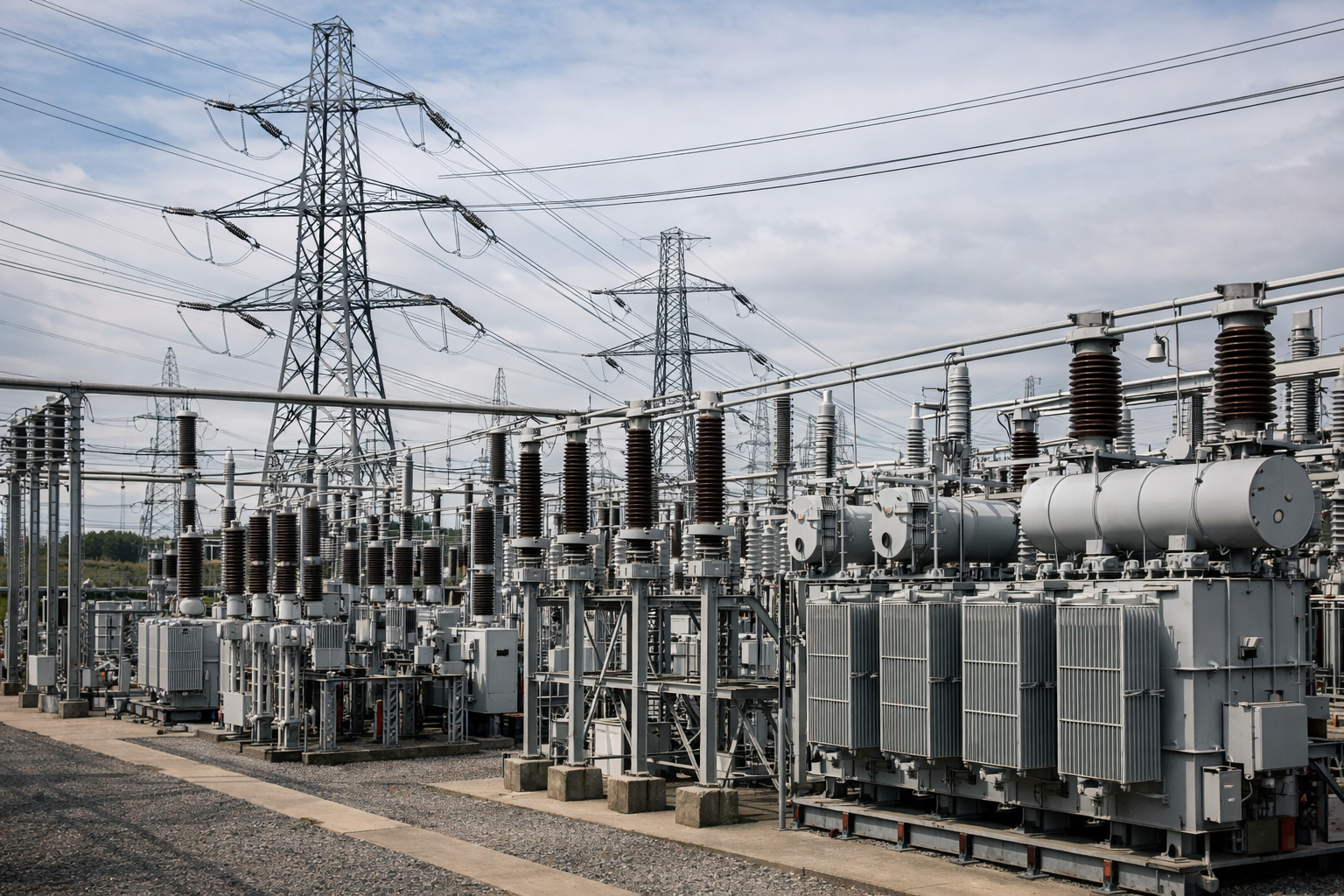
The awarded scope covers the HVDC solution for the converter stations, including converter valves, MACH digital control technology, power transformers, high-voltage switchgear, system studies, design and engineering, equipment supply, installation supervision, and commissioning. Civil works and parts of the electromechanical and auxiliary system installation will be carried out by consortium partners including D’Agostino Costruzioni Generali in Italy and Orascom Construction in Tunisia.
With procurement complete, Elmed now moves into the delivery phase for the first HVDC submarine electricity interconnection between Europe and North Africa. Converter stations will sit at the heart of the scheme, controlling the conversion between alternating current networks and the direct-current cable system while managing power-flow control, stability support, fault response, and integration with transmission systems on both sides of the Mediterranean.
Across Europe, cross-border power infrastructure is absorbing a larger share of the engineering burden created by variable renewable generation, changing power flows, and rising concerns over energy security. Submarine HVDC projects increasingly provide the controllability required to move large volumes of electricity over long distances, particularly where conventional AC reinforcement would be technically or environmentally constrained.
Elmed’s Euro-Mediterranean position gives the project additional strategic weight. Renewable output can only displace fossil generation at scale if power can move across constrained regions, between markets, and through systems with enough operational flexibility to handle fluctuating supply. HVDC technology offers that control while limiting the losses and practical constraints associated with long-distance AC links.
The project also forms part of Europe’s wider effort to diversify energy routes and strengthen supply resilience. Total investment in the electricity link is about €1.42bn, including €307m allocated through the Connecting Europe Facility. Support from European and international financial institutions on the Tunisian side, including the World Bank, the European Investment Bank, the European Bank for Reconstruction and Development, and KfW, places the scheme within a broader infrastructure and development framework.
Delivery will depend on more than cable installation. Converter-station projects combine high-voltage equipment, power electronics, cooling systems, digital control, protection, auxiliary power, civil engineering, installation logistics, and commissioning into a single operating system. Capacity ratings define the public headline, but long-term value depends on how reliably the asset behaves under real market and network conditions.
The same grid-engineering pressure is visible in the UK, where a Glasgow grid engineering centre has been opened to support network upgrade and clean energy programmes. Specialist HVDC expertise, high-voltage switchgear, transformers, and control systems are now in heavy demand across interconnector, offshore wind, storage, and transmission reinforcement projects.
Elmed’s next stages will be measured through converter-station construction, cable installation, system testing, and commissioning. If delivered as planned, the link will add controllable transfer capacity between two regions with increasingly connected energy priorities. The technical centre of the project is the HVDC equipment package, while the wider significance lies in the growing role of transmission infrastructure as the practical machinery of energy transition.

