
IN Brief:
- Second Foundation is developing 307MW of Czech battery storage across projects at Tušimice, Stonava, and Vraňany.
- The Tušimice scheme is planned as a 200MW/400MWh battery connected directly to the transmission system.
- The portfolio combines local battery technology, proprietary energy management software, and optimisation by Nano Energies.
Second Foundation is advancing a 307MW battery energy storage portfolio in the Czech Republic, with three projects under development at Tušimice, Stonava, and Vraňany.
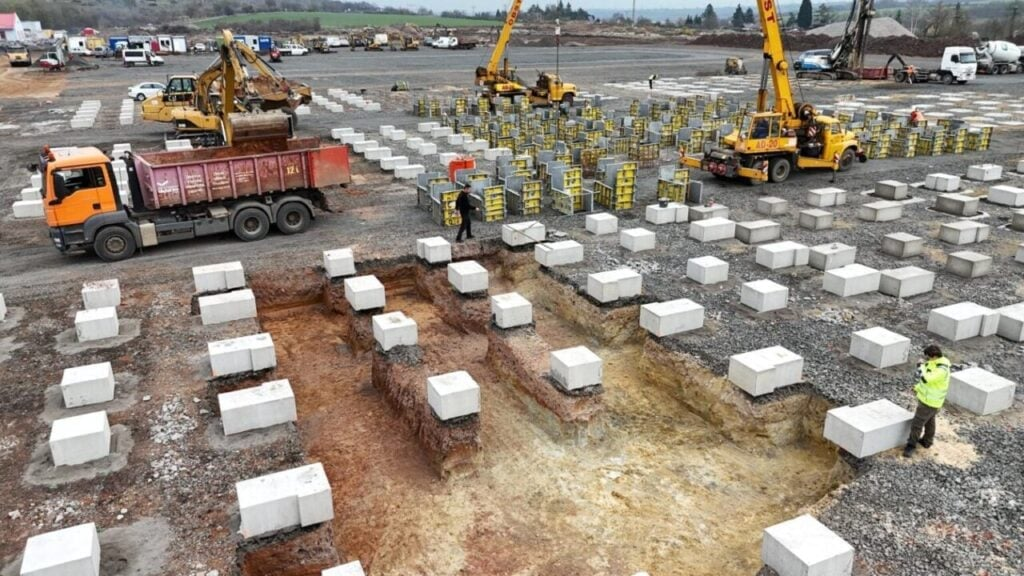
The largest project is planned at Tušimice, where Second Foundation is developing a 200MW/400MWh battery system. The scheme is expected to connect directly to the Czech transmission system through a privately owned substation, creating one of the country’s most significant battery grid connections.
The wider portfolio also includes an 87MW/180MWh project at Stonava and a 20MW/40MWh project at Vraňany. Together, the three schemes represent a sizeable step in a Czech storage market that has been slower to scale than several neighbouring European systems.
The projects are expected to use technology from Czech battery manufacturer Gaz Energy, with Nano Energies involved in optimisation. Second Foundation has also developed proprietary energy management and battery management software, adding a digital operating layer to the portfolio alongside storage hardware, grid connection infrastructure, and market participation.
Total investment has been placed at around CZK4bn, or approximately €164m. Commissioning is expected to begin in 2026, with the systems designed to provide ancillary services and support the Czech transmission network as renewable generation and flexibility requirements grow.
The commercial context for European storage is becoming more transparent as revenue assessment improves. Nord Pool’s decision to add a benchmark for European BESS revenues sits alongside a wider shift toward better data for investors, optimisers, and asset owners looking to model storage returns across different markets.
For the Czech Republic, the technical requirement is developing alongside market reform. Grid-scale batteries can support frequency response, reserve, congestion management, and renewable balancing, but only where they are connected, metered, controlled, and dispatched in a way that system operators can rely on. Transmission-connected storage raises that bar further.
The Tušimice project’s direct connection to the transmission system gives it a different profile from smaller distribution-connected assets. Higher-voltage integration brings more demanding requirements around protection coordination, telemetry, dispatch interfaces, fault response, earthing, transformer specification, and compliance with grid codes. It also allows the asset to interact more directly with system-level constraints.
The portfolio also reflects a wider European move toward tighter coupling between storage development, local manufacturing, and digital control. Battery assets are no longer bought as simple containerised products. Their operating value depends on how cells, inverters, transformers, switchgear, protection relays, control software, and optimisation platforms are combined into a reliable electrical asset.
Local production may carry further strategic weight as European developers work through equipment availability and supply-chain risk. Storage projects remain exposed to global battery cell markets, but enclosure design, system integration, control architecture, commissioning, and service support can be regionalised. That gives developers more influence over delivery schedules, maintenance models, and compliance with domestic network requirements.
The Czech storage market still has to prove the depth of its revenue streams as more capacity connects. Ancillary service prices can be attractive while a market is young, but they tend to tighten as participation increases. Projects with strong grid-connection positions, robust software, and access to multiple services are likely to be better placed as competition builds.
Further information on Second Foundation’s storage activities is available from Second Foundation.

